Accès
Ouvert au public
Architecture, patrimoine et histoire · Préfecture de Kagoshima
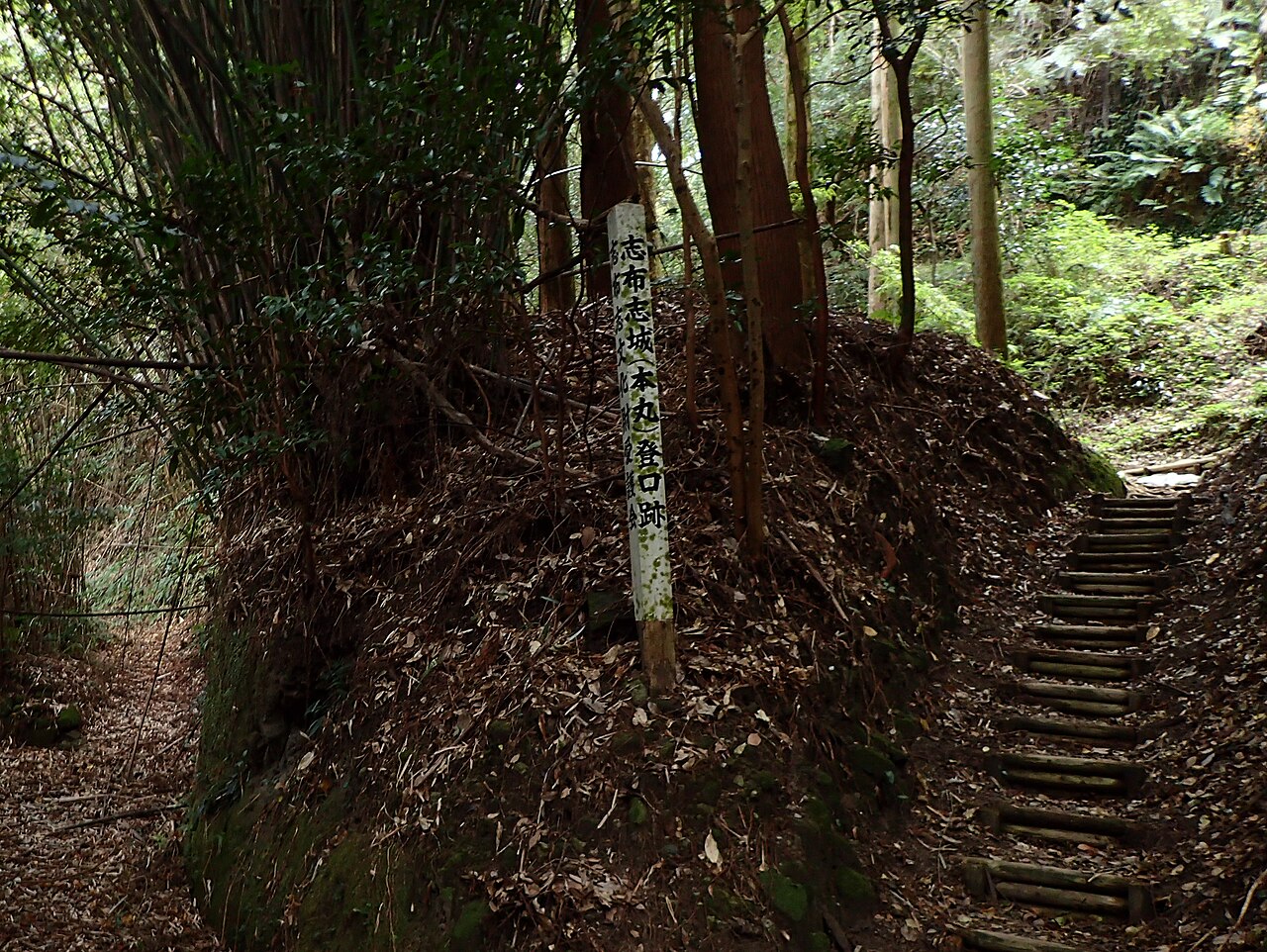
Chiran Castle occupies a shirasu plateau – the pale volcanic deposit typical of southern Kyūshū – about 170 metres above the Fumoto valley. Its enclosures, carved into the soft rock, are separated by ravines and dry moats with near-vertical walls sometimes 40 metres high, making it the most representative and one of the best-preserved medieval shirasu castles in the region. The site covers nearly 45 hectares. Originally attributed to the local Chiran lords, it became in the 14th century the fief of the Sata clan, a cadet branch of the Shimazu, who held it almost without interruption until the end of the Edo period. Ravaged by fire in the early 17th century, the castle was abandoned and seigneurial life moved to the samurai town at the foot of the plateau, now famous for its residences and gardens. No buildings survive, but the terraces, earthen embankments and deep moats can be explored freely; the site is one of the Continued Top 100 Japanese Castles.
Toutes les informations pour organiser votre venue au Chiran Castle.
Ouvert au public
Exemple le plus représentatif des châteaux médiévaux en shirasu du sud de Kyūshū
Fossés secs doubles et falaises verticales atteignant 40 m
Vaste site d'environ 45 hectares, peu modifié depuis son abandon
Fin de l'époque de Heian : fondation attribuée au chef de district Chiran Tadanobu. XIVe siècle (époque Nanbokuchō/Muromachi) : Ashikaga Takauji confie la région à Sata Tadamitsu, fils de Shimazu Tadamune ; début de la lignée Sata. Début XVe siècle : lors des luttes internes des Shimazu, le château passe un temps au clan Ijūin, puis revient aux Sata. 1587 : reddition des Shimazu face à Toyotomi Hideyoshi. 1591 : les Sata sont dépossédés de Chiran. 1610 : retour des Sata à Chiran. Vers 1615 : incendie et abandon du château, dans le contexte de la règle « un château par province ». 1993 (7 mai) : classement comme site historique national. 2017 : inscription parmi les 100 autres châteaux célèbres du Japon (n° 198).
Découvrez les femmes et les hommes documentés dans l’histoire de ce château et retrouvez, pour chacun, les autres demeures auxquelles ils sont associés.
Hirayamajiro / château médiéval sur plateau de shirasu (tuf volcanique), environ 800 m nord-sud sur 900 m est-ouest (env. 45 ha). Deux groupes d'enceintes : honmaru, Imajō, Kura no jō, Yumiba-jō, et des enceintes satellites (Shikibudono-jō, Chigo-jō, Higashi/Nishi/Minami no kakoi, résidence Izudono). Les enceintes, à l'exception du honmaru, sont ceintes de doubles fossés secs profonds ; falaises verticales jusqu'à 40 m, talus de terre, porte en chicane (masugata). Fouilles : céramiques chinoises, objets en fer. Aucun bâtiment conservé, aucune reconstruction.
Ruines classées site historique national (1993), gérées par la ville de Minamikyūshū et accessibles librement ; aucun bâtiment subsistant.
Les principales campagnes documentées qui ont façonné le monument au fil des siècles.
Fondation attribuée par la tradition au chef de district Chiran Tadanobu.
Développement du réseau d'enceintes et de doubles fossés secs par le clan Sata.