Nagano Préfecture de Nagano Japon

Makinoshima Castle

Makinoshima Castle (牧之島城, Makinoshima-jō) stands in Makinoshima, Shinshūshinmachi, in the city of Nagano.

Époque
XVIᵉ siècle (1566)
Style
Hirayamajiro

En un regard

Le château en bref

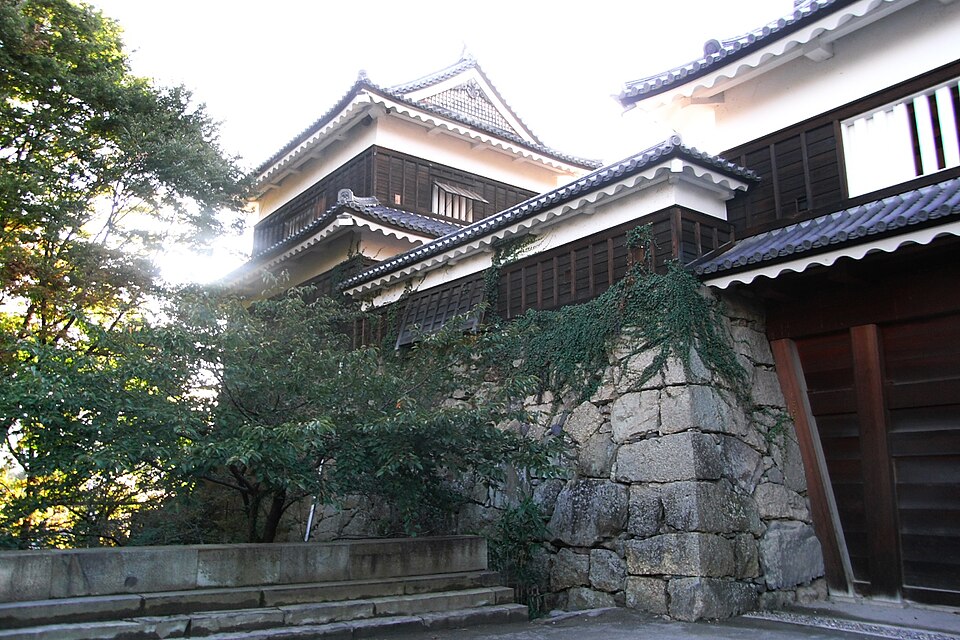
Makinoshima Castle (牧之島城, Makinoshima-jō) stands in Makinoshima, Shinshūshinmachi, in the city of Nagano. It was built in 1566 on part of the former Maki Castle of the Kōsaka: Takeda Shingen commissioned Baba Nobufusa to develop the site in order to watch the forces of Echigo and control the Sarashina and Minochi mountains. After Baba's death at Nagashino in 1575, his son succeeded him. In 1582 the castle passed to Uesugi Kagekatsu, then, after 1598, to Tamaru Naomasa, Mori Tadamasa and finally Matsudaira Tadateru in 1603. It was abandoned in 1616, following Tadateru's disgrace. Protected on three sides by the Sai River and its cliffs, it comprises a honmaru and a ninomaru separated by a water-filled moat, an L-shaped entrance (masugata) and outer works in the form of half-moon enclosures (maru-umadashi), which are typical of Takeda fortification. Designated a prefectural historic site on 31 March 1966, it can be visited freely, and in spring it attracts visitors for its cherry trees.

Époque de construction
XVIᵉ siècle (1566)
Style architectural
Hirayamajiro
Localisation
Nagano, Préfecture de Nagano
État
En ruine
Usage actuel
Vestiges visitables

Pourquoi le découvrir

Trois raisons de découvrir Makinoshima Castle

  1. Construit en 1566 par Baba Nobufusa pour Takeda Shingen

    Lire son histoire
  2. Protégé sur trois côtés par la rivière Sai

    Parcourir la chronologie
  3. Maru-umadashi et entrée masugata typiques des Takeda

    Observer l’architecture

Récit

Une histoire à travers les siècles

Le récit

L’histoire de Makinoshima Castle

Construit en 1566 par Baba Nobufusa sur ordre de Takeda Shingen, sur l'ancien château Maki des Kōsaka. Fils de Baba après 1575 ; Uesugi Kagekatsu en 1582 (installation des Imokawa) ; Tamaru Naomasa et Mori Tadamasa après 1598 ; Matsudaira Tadateru dès 1603. Abandon en 1616. Site historique préfectoral le 31 mars 1966 ; monographie publiée par le comité d'éducation de Shinshūshinmachi en 1966.

L’architecture

Ce qu’il faut observer

Château de plateau (hirayamajiro) protégé sur trois côtés par la rivière Sai. Honmaru d'environ 56 × 51 m et ninomaru d'environ 77 × 40 m, séparés par un fossé en eau ; entrée masugata, maru-umadashi et kakushi-umadashi (ouvrage avancé dissimulé). Fossés et levées de terre conservés ; aucun donjon.

Chronologie

Les étapes de construction

Les campagnes documentées qui ont façonné le monument, période par période.

Renaissance

  1. 1566

    Construction

    Aménagement par Baba Nobufusa pour Takeda Shingen.

Informations pratiques

Préparer sa visite

Conditions de visite non renseignées

Nous n’avons pas encore d’information vérifiée sur l’ouverture au public. Renseignez-vous auprès du site officiel ou de la mairie avant de vous déplacer.

Vous l’avez visité ?

Aucune photo pour l’instant : partagez la vôtre

Après relecture, votre photo illustrera cette fiche, créditée à votre nom. Haute définition bienvenue, jusqu’à 40 Mo.

Propriétaires et gestionnaires

Vous gérez Makinoshima Castle ?

Horaires, tarifs et réservation manquent encore sur cette fiche. Transmettez-les et mettez le château en avant auprès des visiteurs qui préparent leur venue.