
Urasoe
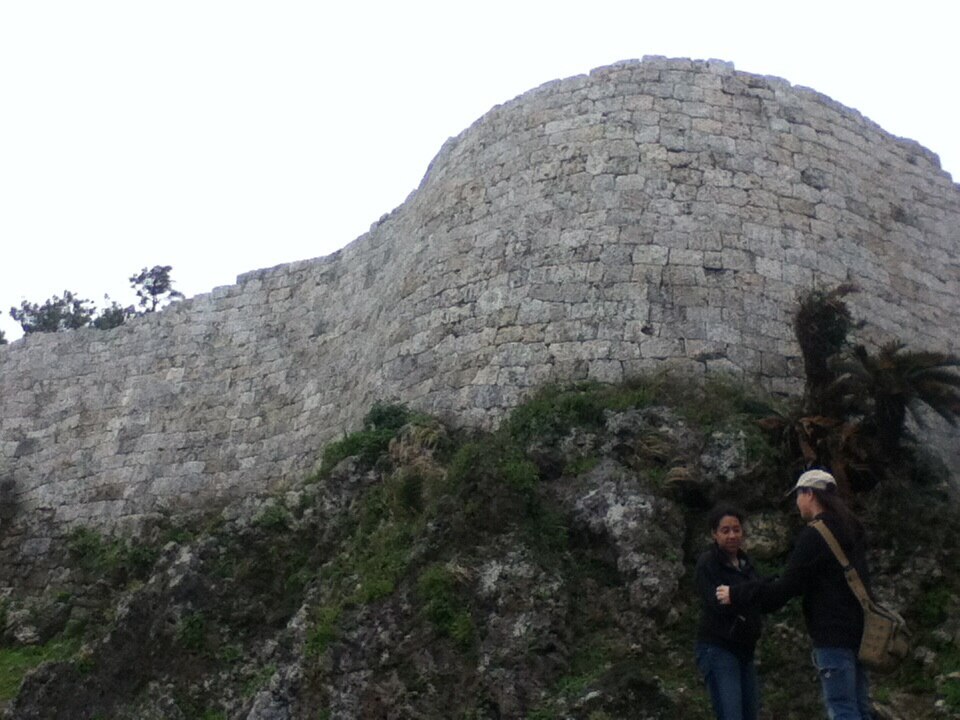
Château d'Urasoe
Roi de Chūzan (r. 1260-1299), régnant depuis Urasoe ; inhumé à l'Urasoe yōdore
→King of Chūzan
Eiso was a ruler of Chūzan, the central principality of Okinawa, who reigned from 1260 to 1299 from Urasoe Castle, then the capital of the emerging Kingdom of Ryūkyū. He founded a royal line that retained power until the mid-14th century, and he is closely associated with the Urasoe site. Tradition dates the founding of the Urasoe yōdore, a royal mausoleum carved into the north-western cliff of the castle, to 1261, and its western chamber is considered to be his tomb. His line is also associated with Iso gusuku, neighbouring Urasoe, and tradition links Tamagusuku Castle to his descendants, where King Tamagusuku, the fourth ruler of the line, is said to have resided.
Under Eiso, Urasoe Castle, perched on a limestone ridge north of present-day Naha, was the political centre of Chūzan. The city of Urasoe today presents itself as the place where the foundations of the Kingdom of Ryūkyū were said to have been laid. The capital was not moved to Shuri until much later, and Urasoe was partly dismantled in the 16th century to supply materials for the new castle.
Château d'UrasoeStart of Eiso's reign over Chūzan, from Urasoe Castle.
Traditional founding of the Urasoe yōdore, a royal mausoleum at the foot of Urasoe Castle; archaeology places the first construction in the 13th century, and a Korean roof tile suggests 1273.
End of Eiso's reign; he is buried in the Urasoe yōdore, in stone sarcophagi of Chinese origin.
Tradition attributes to Eiso the founding in 1261 of the Urasoe yōdore, a royal tomb cut into the cliff. Excavations confirm a first construction in the 13th century, and a Korean roof tile bearing a cyclical date corresponding to 1273 is often retained as a reference point. The western chamber, which contains three stone sarcophagi, the largest of which is attributed to him, is identified as his tomb, without decisive proof. The site later accommodated other kings, including Shō Nei.
Cette synthèse croise plusieurs sources pour documenter les lieux, événements et relations historiques.