
Dortmund
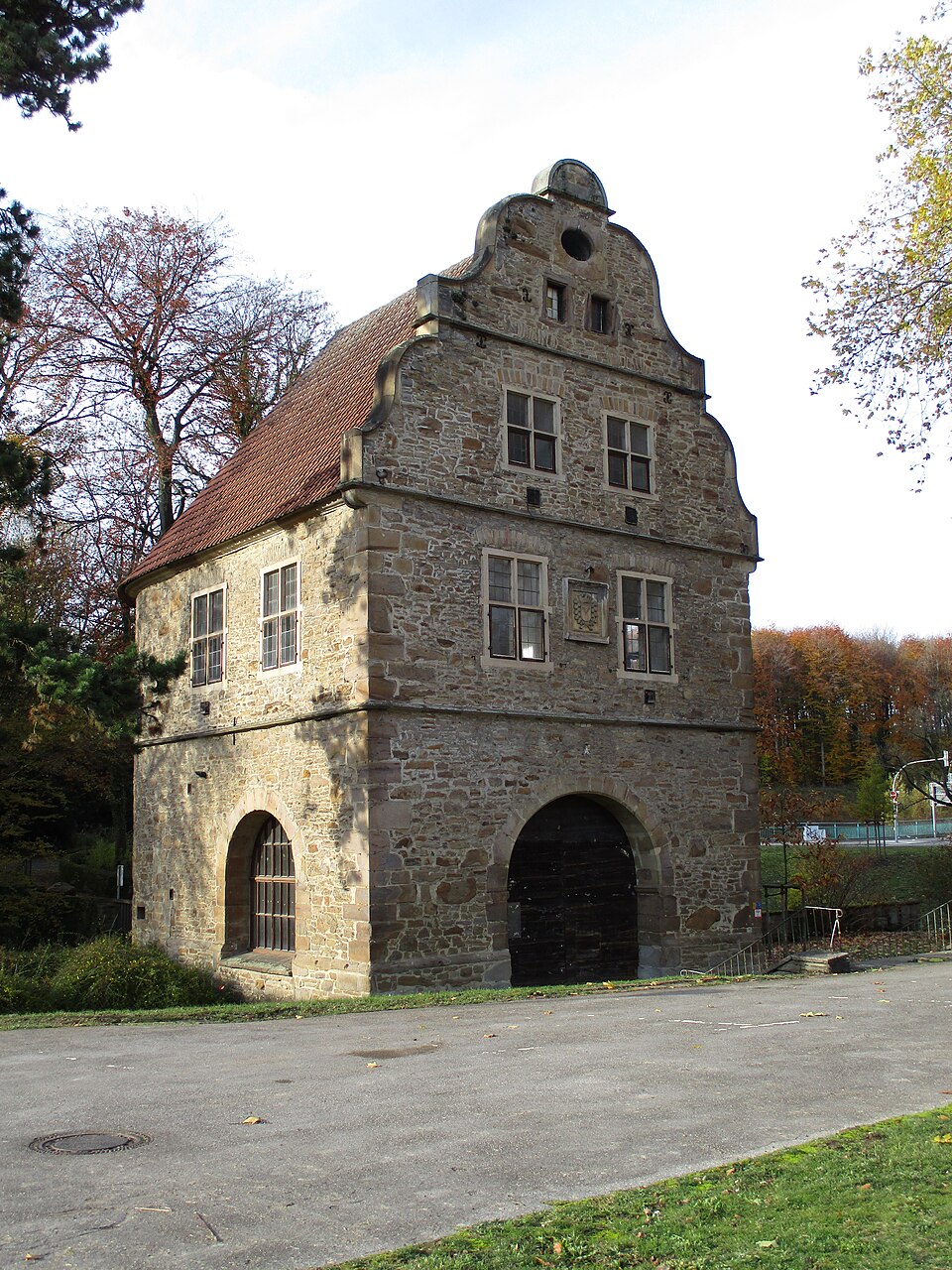
Torhaus Brünninghausen
seigneur de Brünninghausen, préfet du département de la Ruhr · 1773-1859
→Baron (Freiherr) · Prefect of the Ruhr department (1809–1813) · Chamberlain at the Prussian court
Gisbert von Romberg (Brünninghausen, 19 July 1773 – Brünninghausen, 4 August 1859) was lord of Haus Brünninghausen, a mining entrepreneur and prefect of the Ruhr department, seated in Dortmund, from 1809 to 1813 under Napoleonic administration. Heir to a vast family estate, he took over the Brünninghausen, Bladenhorst and Buldern domains in 1795 and made the coal mines on his lands prosper. His name remains tied to the water castle of Brünninghausen, seat of the Romberg family since 1483, of which the entrance pavilion (Torhaus) on the edge of the Rombergpark survives today.
In 1795, Gisbert von Romberg inherited large family estates. The Rombergs, owners of Haus Brünninghausen since 1483, had invested in coal mining as early as the 17th century, and their mining activities are documented in substantial archives preserved in the Romberg collection.
Torhaus BrünninghausenBorn at Haus Brünninghausen, son of Caspar Adolf von Romberg and Louise von Diepenbrock.
Appointed chamberlain (Kammerherr).
On his father's death, he took over the Brünninghausen, Bladenhorst and Buldern domains.
Prefect of the Ruhr department, seated in Dortmund.
Died at Haus Brünninghausen at the age of 86.
In 1809, he was appointed prefect of the Ruhr department, seated in Dortmund, with responsibility for general administration, finance and war. According to historiography, he protested to Napoleon in 1811 against high taxes and succeeded in keeping order in his department during the disturbances of 1813.
This summary cross-references several sources to document the places, events and historical relationships.