
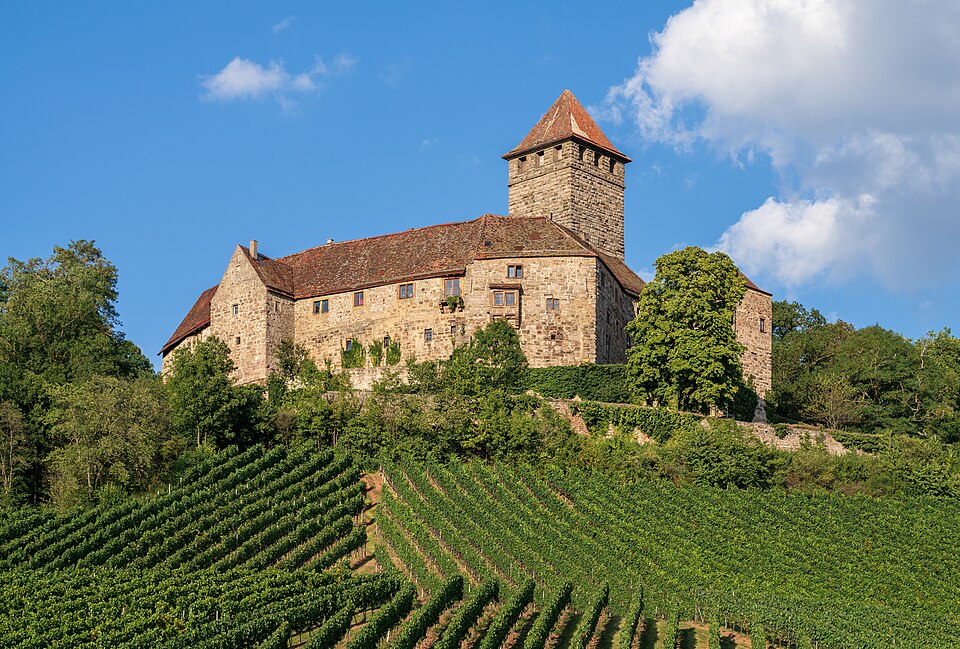
Oberstenfeld
Burg Lichtenberg
chancelier de Louis IV de Bavière, évêque de Wurtzbourg · 1333-1335
→chancellor of Louis IV of Bavaria (from 1317) · (contested) bishop of Würzburg (1333–1335) · scholaster of Speyer Cathedral · provost of Saint-Germain, Speyer
Clerc issu de la petite noblesse souabe des Hummel von Lichtenberg, seigneurs du château de Lichtenberg au-dessus d'Oberstenfeld près de Großbottwar, Hermann II (mort en 1335) fit carrière au service de l'empereur Louis IV de Bavière, dont il fut chancelier dès 1317. Élu évêque de Würzburg en 1333 par la majorité du chapitre en présence de Louis, il se heurta au candidat pontifical Otto von Wolfskeel et reste considéré comme un évêque contesté. Son destin illustre l'ascension d'une famille castrale régionale dans l'entourage impérial.
The Hummel von Lichtenberg, who have borne this name since 1297, held a small lordship in the 13th century around Großbottwar, anchored on Lichtenberg Castle overlooking Oberstenfeld. Two brothers distinguished themselves in the service of Louis of Bavaria: Hermann as chancellor, Albrecht as marshal, present at the victory of Mühldorf in 1322. Financial difficulties later led to the sale of the castle to Württemberg in 1357.
Burg LichtenbergFirst mention: student at Bologna.
Canon of Speyer, then scholaster of the cathedral and provost of Saint-Germain.
Chancellor of Louis IV of Bavaria.
Elected Bishop of Würzburg by the majority of the chapter, in the presence of Louis IV, to succeed Wolfram von Grumbach; confirmed by Baudouin de Trèves, administrator of Mainz, but Pope Jean XXII provided Otto von Wolfskeel.
Unsuccessfully led the siege of Meersburg for the emperor.
Died, probably in Würzburg.
The 1333 election forms part of the conflict between Louis IV and the papacy at Avignon: Jean XXII set Otto von Wolfskeel against Hermann. The NDB describes him as an '(anti-)bishop'; nevertheless he held on until his death in 1335.
Cette synthèse croise plusieurs sources pour documenter les lieux, événements et relations historiques.