
Murakami
Château de Murakami
Seigneur du château (1551-1598), assiégé par Uesugi Kenshin en 1568-1569
→Echizen no kami
Honjō Shigenaga (1540-1614) was a Sengoku-period warrior lord, head of the Honjō clan of northern Echigo Province and master of Honjō Castle, later Murakami Castle, on Mount Gagyū. A frequently unruly vassal of the Uesugi, he rebelled against Uesugi Kenshin in 1568 with the backing of Takeda Shingen and held out against the siege of his castle before submitting in 1569. He then rallied to Uesugi Kagekatsu, fought the Mogami in 1588, followed the Uesugi to Aizu in 1598, and defended Fukushima Castle against Date Masamune in 1600-1601. He is also known for having owned the famous Honjō Masamune sword.
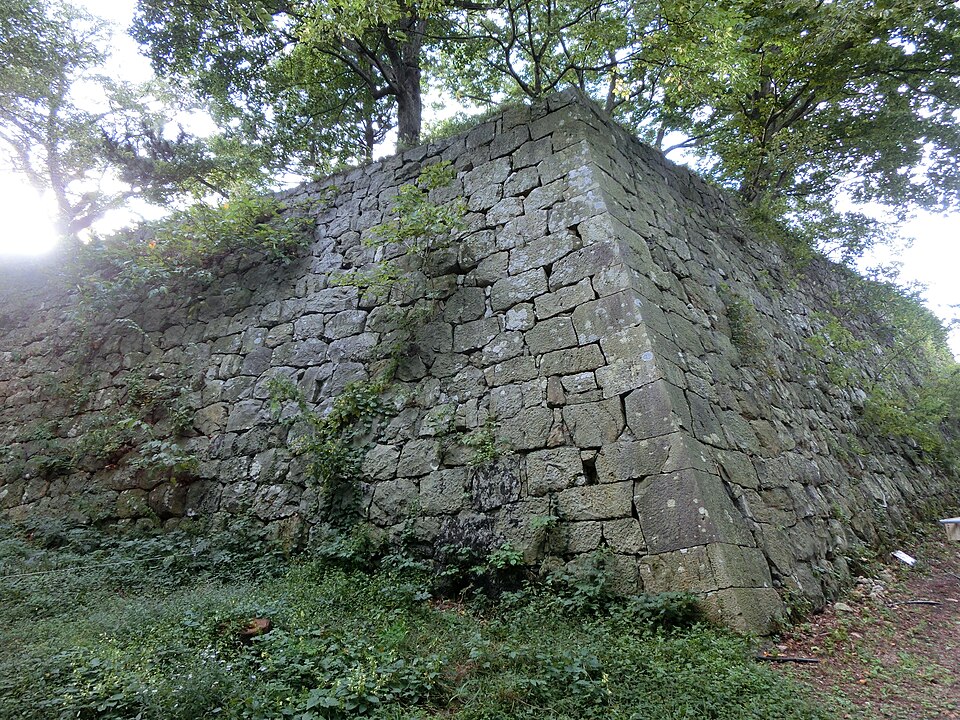
Heir to the Honjō clan, a branch of the Taira of Chichibu established in northern Echigo, Shigenaga inherited Honjō Castle, perched on Mount Gagyū, in 1551. The site, which would become Murakami Castle, still preserves on its eastern slope terraces, moats and earthworks attributed to the Honjō period, distinct from the stone ramparts added after his departure.
Château de MurakamiBirth; son of Honjō Fusanaga.
Takes over the Honjō clan and Honjō Castle (later Murakami Castle).
Joins Takeda Shingen against Uesugi Kenshin, who besieges his castle.
Isolated, he submits and sends his heir as a hostage to Kasugayama; Kenshin pardons him.
Supports Uesugi Kagekatsu during the succession crisis (the Otate rebellion).
Defeats a Mogami army at the Battle of Jūgorihara and recovers Shōnai.
Toyotomi Hideyoshi strips him of his domains.
Follows Uesugi Kagekatsu, transferred to Aizu; Murakami Castle passes to Murakami Yorikatsu.
Defends Fukushima Castle against Date Masamune (Battle of Matsukawa).
Death.
A general of Uesugi Kenshin, notably at Kawanakajima, Shigenaga rebelled in 1568 with the encouragement of Takeda Shingen. Kenshin besieged the castle without managing to take it by force; isolated, Shigenaga submitted in 1569 and obtained his pardon. After Kenshin's death, he supported Uesugi Kagekatsu, won the Battle of Jūgorihara against the Mogami in 1588, then followed the clan to Aizu in 1598 and defended Fukushima against Date Masamune.
Cette synthèse croise plusieurs sources pour documenter les lieux, événements et relations historiques.