
Castries
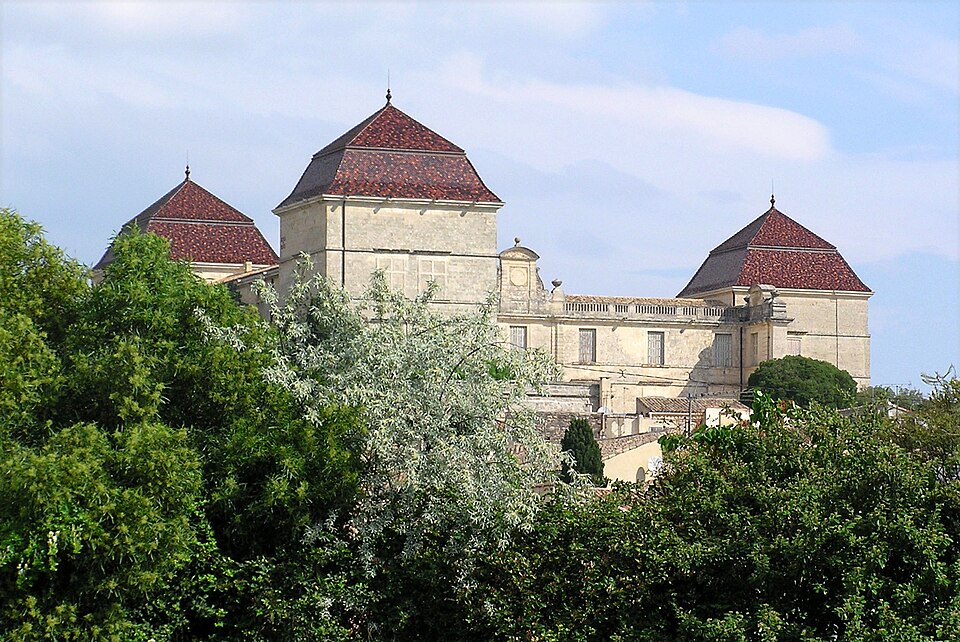
Château de Castries
Commanditaire du château (1565)
→Baron of Castries
Jacques de La Croix, Baron of Castries (died 1575), is the lord who undertook, in 1565, the construction of a new château at Castries, on the remains of the medieval fortress. He belonged to the La Croix family, a Montpellier lineage attested from the 14th century, which acquired the barony in 1495 with Guillaume de La Croix, governor of Montpellier and president of the Court of Aids. The surviving sources on him remain sparse: it is mainly known that at his death in 1575 his property was divided between two sons who were still very young. The elder, Jean, kept the Languedoc lands and the Barony of Castries; he was the father of René-Gaspard, future first Marquis. The younger, Gaspard, received the lordship of Meyrargues in Provence and founded a separate branch, from which Duke René de Castries would descend in the 20th century. The project begun by Jacques corresponds to the campaign of the second half of the 16th century noted in the Monuments historiques record; it would be interrupted by the destruction of 1622, before the major reconstruction of 1645–1670.
In the midst of the Wars of Religion, Jacques de La Croix undertook to replace the old Gothic château of Castries with a more modern residence. The Mérimée record points to a building campaign in the second half of the 16th century. The edifice was damaged and then razed in 1622; only the vaulted rooms of the north wing survive.
Château de CastriesGuillaume de La Croix, of his family, acquires the barony of Castries.
He undertakes the construction of a new château at Castries, on the remains of the former keep.
Death; division of his property between his sons Jean (Barony of Castries) and Gaspard (lordship of Meyrargues).
The old château is razed on the orders of the Duke of Rohan.
The division of 1575 gave rise to the two branches of the family. The elder branch, descended from Jean, became marquisal and then ducal, and died out in 1900 with Élisabeth de Mac Mahon. The younger branch, descended from Gaspard de Meyrargues, continued down to Duke René de Castries, who bought back the château in 1935.
Cette synthèse croise plusieurs sources pour documenter les lieux, événements et relations historiques.