
Ōno
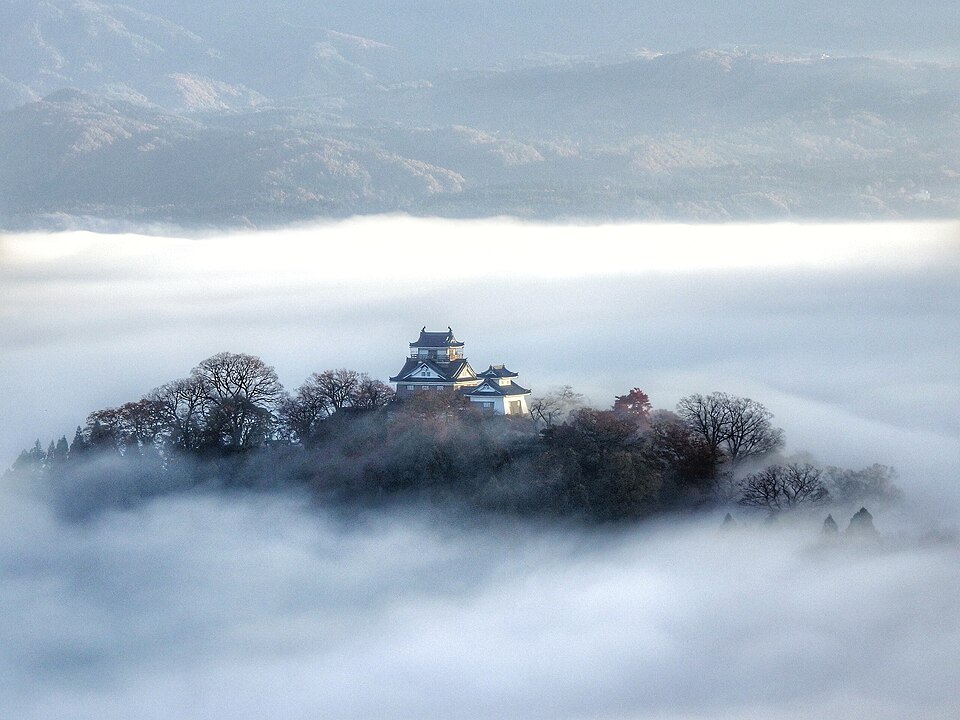
Château d'Echizen-Ōno
Fondateur (1575-1580)
→Lord of Ōno (Echizen) · Lord of Takayama (Hida)
Kanamori Nagachika (1524-1608) is a Sengoku-period warlord whose name is attached to two castle towns he shaped: Ōno, in Echizen, and Takayama, in Hida Province. Initially in the service of the Saitō of Mino, he transferred to Oda Nobunaga in 1567 and distinguished himself notably at Nagashino (1575). Rewarded after the subjugation of the Echizen Ikkō-ikki with a large part of Ōno district, he built Echizen-Ōno Castle on Mount Kameyama and laid out a grid-patterned town at its foot, later nicknamed the 'little Kyoto' of Hokuriku. Under Toyotomi Hideyoshi, he conquered Hida Province in 1585 and established the Takayama domain there, which he governed until his death. Having sided with Tokugawa Ieyasu at Sekigahara (1600), he was also a tea master and admirer of Sen no Rikyū, whose son Sen Dōan he protected after his master's disgrace.
At Ōno, Kanamori Nagachika paired the castle on Mount Kameyama with a town laid out on an orthogonal plan, extending along the eastern foot of the hill. This layout, still legible today, earned Ōno the nickname 'little Kyoto' of Hokuriku according to the city of Ōno. He repeated this model at Takayama after 1586, making him one of the great town planners of his era.
Château d'Echizen-ŌnoBirth.
After the fall of the Saitō at Inabayama, he becomes a vassal of Oda Nobunaga.
Fights at Nagashino; the same year, after the pacification of Echizen, he receives two-thirds of Ōno district and begins work on Mount Kameyama castle.
Completion generally accepted for Echizen-Ōno Castle.
His eldest son Kanamori Naganori dies during the Honnō-ji Incident.
On Hideyoshi's orders, he subdues Hida Province (Anegakōji clan).
Leaves Ōno for Takayama, in Hida.
Fights at Sekigahara on Tokugawa Ieyasu's side.
Dies on 20 September.
An admirer of Sen no Rikyū, Nagachika practised the tea ceremony and gave refuge to Sen Dōan after Hideyoshi ordered Rikyū to commit suicide.
Cette synthèse croise plusieurs sources pour documenter les lieux, événements et relations historiques.