
Jōetsu
Château de Takada
Seigneur pour qui le château fut bâti (1614-1616)
→Daimyō of Takada (1610-1616)
Matsudaira Tadateru (1592-1683), sixth son of Tokugawa Ieyasu, is the lord for whom the Tokugawa shogunate had Takada Castle built in 1614. Successively lord of the fiefs of Fukaya, Sakura and Kawanakajima, he received the Takada domain in Echigo in 1610. As son-in-law of Date Masamune, he saw his father-in-law direct the construction of his new castle, built in a matter of months with the help of thirteen daimyō households. His fortune was nonetheless short-lived: after the Ōsaka campaign of 1615, where his tardiness and conduct were held against him, his half-brother, the shōgun Tokugawa Hidetada, stripped him of his lands in 1616. Exiled to Asama in Ise, then to Takayama in Hida and finally to Suwa in Shinano, he died there in 1683 at the age of 91, after more than sixty-five years of banishment.
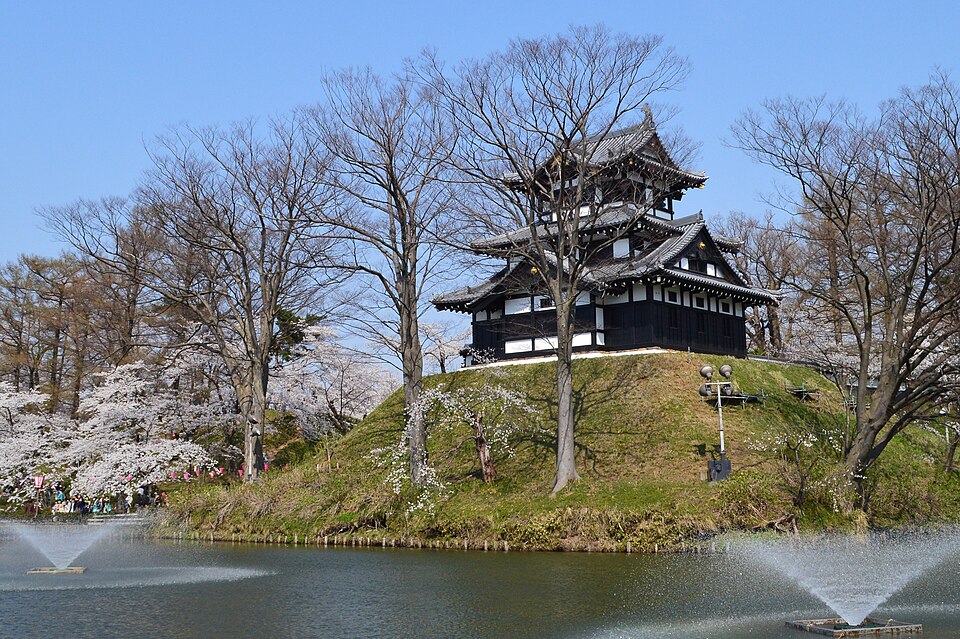
Takada is one of the major projects ordered by the shogunate at the beginning of the Edo period: thirteen daimyō households, including those of Maeda and Uesugi, provided men and resources under the direction of Date Masamune. The flatland castle, defended by earthen ramparts and wide moats, was completed in roughly four months to receive Tadateru.
Château de TakadaBorn at Edo Castle, son of Tokugawa Ieyasu and Lady Chaa.
Successively lord of Fukaya (Musashi), Sakura (Shimousa) and Kawanakajima (Shinano).
Marries Irohahime, eldest daughter of Date Masamune.
Receives the Takada domain in Echigo.
Construction of Takada Castle by thirteen daimyō on the shogunate's orders; Tadateru takes up residence there.
Dismissal (kaieki) by Tokugawa Hidetada; exile to Asama in Ise.
Transferred to Takayama (Hida), then to Suwa (Shinano).
Dies at Suwa; interred at Jōshō-in temple.
Posthumous rehabilitation by Tokugawa Tsunenari, head of the Tokugawa house.
The dismissal of 1616 is attributed mainly to his tardiness during the summer campaign of Ōsaka; sources also mention the killing of the shōgun's vassals by one of his men, and his supposed ties with Christians and foreign trade. He spent the rest of his long life under house arrest, lastly at Suwa.
Cette synthèse croise plusieurs sources pour documenter les lieux, événements et relations historiques.