
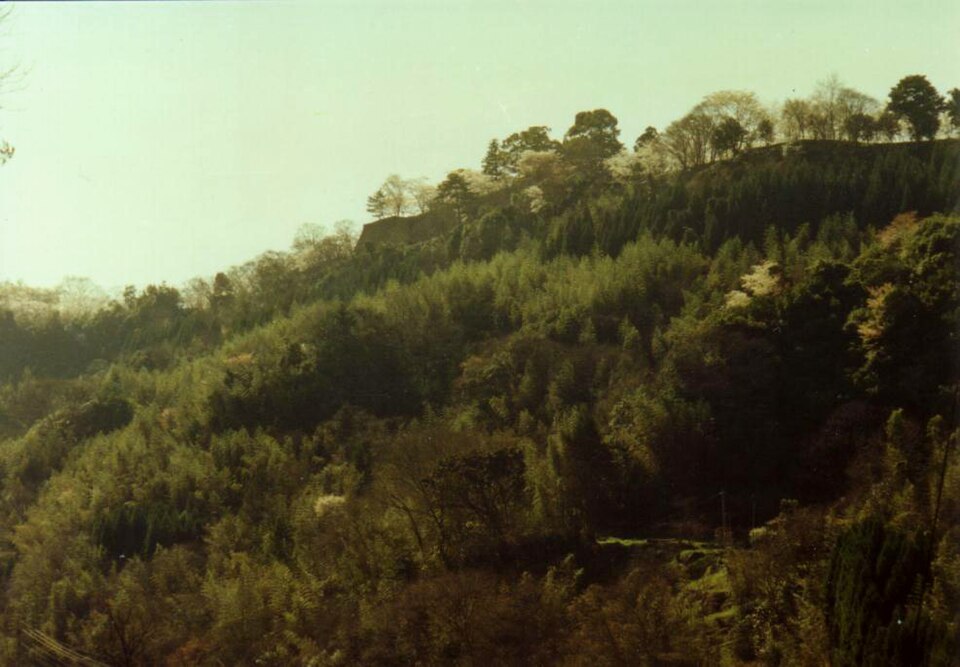
Taketa
Château d'Oka
premier seigneur du fief d'Oka, bâtisseur du château à murs de pierre · 1594-1612
→Daimyō of Oka (1594-1612)
Nakagawa Hidenari (1570-1612) is a daimyō of the late Azuchi-Momoyama and early Edo periods, the second son of Nakagawa Kiyohide. He inherits the household in 1592 on the death of his elder brother Hidemasa, and is transferred by Toyotomi Hideyoshi to the Oka domain in Bungo (Taketa, Ōita Prefecture), of which he is lord from 1594 until his death. He turns the core of the castle into a modern fortress. In 1600, during the Sekigahara campaign, he joins the Eastern army, defeats Ōta Kazuyoshi near Usuki and keeps his domain, of about 70,000 koku. The Nakagawa will hold the castle until the end of the Edo period.
Placed at Oka by Hideyoshi after the fall of the Ōtomo, Hidenari transforms, according to japancastle.jp, the castle's core into a modern fortress. His revenue rises from 66,000 to 74,000 koku according to Wikipedia, the domain being valued at around 70,000 koku in the Edo period.
Château d'OkaInherits the Nakagawa household on the death of his elder brother Hidemasa.
Start of his rule over the Oka domain (Bungo).
Takes part in the invasion of Korea under Tōdō Takatora.
At Sekigahara, fights in the Eastern army and defeats Ōta Kazuyoshi; Tokugawa Ieyasu allows him to keep his domain.
Death of Nakagawa Hidenari.
After first being close to Ishida Mitsunari, according to japancastle.jp, he sides with Tokugawa Ieyasu and narrowly defeats Ōta Kazuyoshi, at the cost of heavy losses; the Nakagawa then keep Oka until the end of the Edo period.
This summary cross-references several sources to document the places, events and historical relationships.