
Yamaguchi
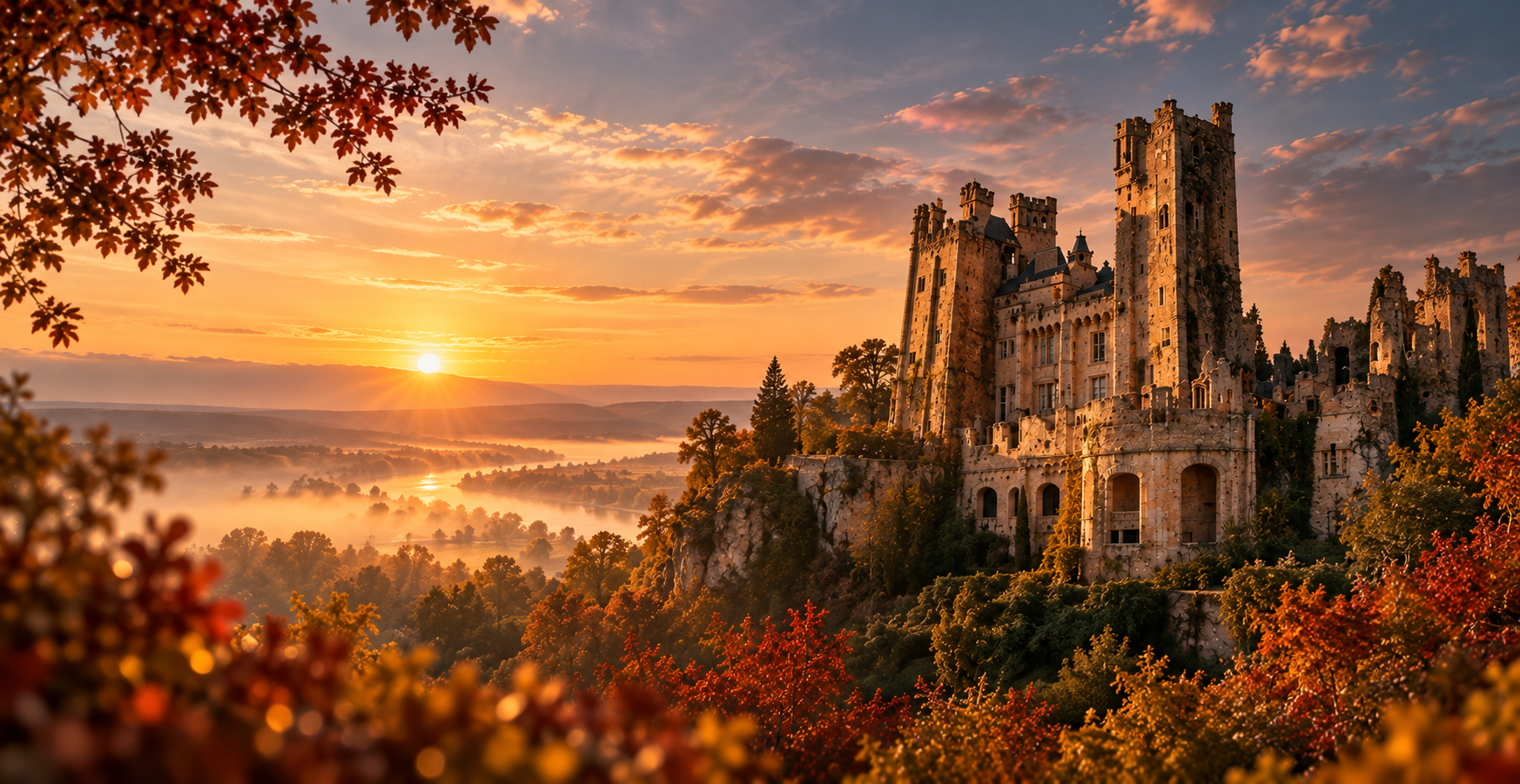
Château de Kōnomine
Fondateur (1556-1557)
→Head of the Ōuchi clan
Ōuchi Yoshinaga (1532-1557), born Ōtomo Haruhide, was the last head of the Ōuchi clan, a powerful house of western Japan based at Yamaguchi. The younger son of Ōtomo Yoshiaki and brother of Ōtomo Sōrin, he was placed at the head of the Ōuchi in 1552 by Tō Harukata, after Ōuchi Yoshitaka had been overthrown. Threatened by the expansion of Mōri Motonari after the Battle of Itsukushima, he began building Kōnomine Castle on the mountain overlooking Yamaguchi in 1556-1557, but had to abandon it unfinished in 1557. Having taken refuge in Nagato, he took his own life at Chōfuku-ji, thereby ending the Ōuchi line.
Born into the Ōtomo house of Bungo, Haruhide was for a time the adopted heir of Ōuchi Yoshitaka. Following Tō Harukata's coup against Yoshitaka, he was installed in 1552 as head of the Ōuchi under the name Yoshinaga, nominal leader of a clan whose real power was held by Tō.
Château de KōnomineBorn in Bungo Province, the younger son of Ōtomo Yoshiaki.
Adopted by Ōuchi Yoshitaka; the adoption was annulled in 1545 when a son was born to Yoshitaka.
Installed as head of the Ōuchi clan by Tō Harukata after Yoshitaka's fall.
Defeat and death of Tō Harukata at the Battle of Itsukushima against Mōri Motonari.
Had Kōnomine Castle built on Mount Kōnomine (338 m) to defend Yamaguchi.
The Mōri enter Yamaguchi; he abandons Kōnomine, takes refuge at Katsuyama Castle in Nagato, then takes his own life at Chōfuku-ji (today Kōzan-ji) in Chōfu.
Following the defeat at Itsukushima (1555), Yoshinaga had a mountain castle built on Mount Kōnomine to cover the Yamaguchi residence. Sources differ on when the work began (spring 1556 or 1557). Still unfinished when the Mōri arrived in 1557, it was abandoned without a fight; the Mōri completed it afterwards. Its ruins, with stone walls at the summit, have been protected as a National Historic Site since 1959.
Cette synthèse croise plusieurs sources pour documenter les lieux, événements et relations historiques.