
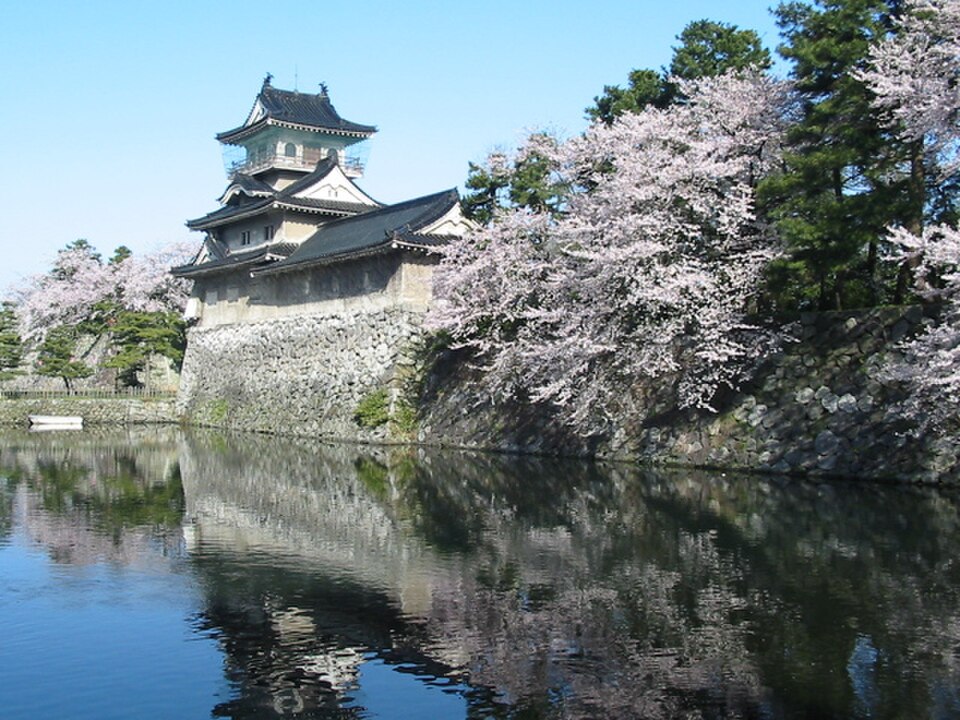
Toyama
Château de Toyama
Seigneur (1581-1585), agrandit le château
→Lord of Etchū (Toyama Castle) · Lord of Higo
Sassa Narimasa (c. 1536-1588) was a warrior from Owari Province who rose from the Kuro-horo guard of Oda Nobunaga and became the lord who turned Toyama Castle into a major stronghold. After serving in Echizen under Shibata Katsuie, he received Etchū in 1581 and settled at Toyama, which he expanded with new moats and towers while undertaking flood-control works. Allied with Tokugawa Ieyasu against Hideyoshi in 1584, he crossed the Tateyama mountains (‘Sarasara-goe’) in the depths of winter to join Ieyasu at Hamamatsu. Besieged at Toyama in 1585, he submitted, received Higo Province in 1587, but after a revolt against his land surveys he was ordered to take his own life at Amagasaki in 1588.
Settling at Toyama in 1581, Narimasa transformed the Jinbō fortress into a powerful stronghold equipped with new moats and towers. He also undertook hydraulic works that helped turn the surrounding marshes into rice fields. His rule ended with the siege of 1585, when Hideyoshi's army surrounded the town.
Château de ToyamaBorn in Owari Province (in the village of Hira according to some encyclopaedias).
Member of Oda Nobunaga's Kuro-horo guard; campaigns against the Asakura and the Ishiyama Hongan-ji; one of the three ‘lords of Fuchū’ in Echizen under Shibata Katsuie.
Receives Etchū Province and settles at Toyama Castle, which he enlarges.
Rallies to Tokugawa Ieyasu and Oda Nobukatsu against Hideyoshi; at the end of the year, crosses the mountains in winter (Sarasara-goe) as far as Hamamatsu.
Besieged at Toyama by Hideyoshi, he submits; the castle passes to the Maeda.
Receives Higo Province and settles at Kumamoto.
Held responsible for the Higo uprising, he is ordered to take his own life at Amagasaki.
According to most chronicles of the Kaga domain, Narimasa left Toyama towards the end of the eleventh month of 1584 and crossed the Sarasara and Harinoki passes to reach Shinano and then Hamamatsu, in order to persuade Ieyasu to continue the war. The Tateyama Prefectural Museum has published a study discussing the actual date (winter or summer) of this crossing, which has become legendary.
Cette synthèse croise plusieurs sources pour documenter les lieux, événements et relations historiques.