
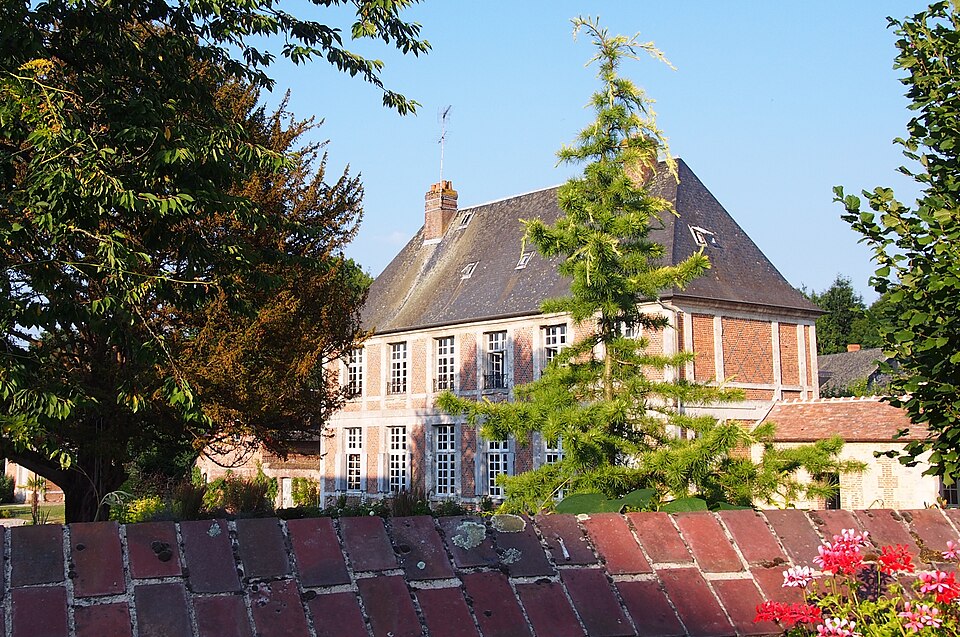
Project to enhance the vestiges of Blangy-le-Château’s castle inspired by the medieval construction site of Guédelon, October 2026
Blangy-le-Château draws inspiration from Guédelon to revive the vestiges of its castle
In late October 2026, a delegation from Blangy-le-Château (Calvados) visited the medieval construction site of Guédelon. The aim: to explore ways of enhancing the motte and ruins of the Crespin castle, held by the barons of Blangy since the year 1000.
Editorial journal · Carte des Châteaux ·
Pays d'Auge
Little remains of Blangy-le-Château’s castle: a five-metre mound in the heart of the village, two sections of wall, and a trickle of water tracing the old moat. Yet this is enough to spark ideas in this Pays d’Auge village, listed among France’s Most Beautiful Villages. On Saturday, 24 October 2026, a small group of residents and local councillors travelled to Burgundy to visit Guédelon, the site where a castle has been under construction since 1997 using medieval tools and materials. The goal was not to replicate this model but to understand how it works and consider what it could bring to the Crespin castle ruins—held by the barons who governed Blangy for over three centuries.
“The mention of our Castelblangeois vestiges even enriched the discussion.”
The lords of Blangy
Gislebert Ier Crespin
XIe siècle
First known baron of Blangy, to whom local tradition attributes the construction of the castle around the year 1000. The commune describes him as the husband of Gonnor de Centvilles, Lady of Livarot, and a supporter of the Duke of Normandy against King Henry I around 1030.
Guillaume Ier Crespin
XIe siècle
Baron of Blangy, he granted around 1050 to the Abbey of Le Bec the tithes from the mills and market of Blangy, as well as the patronage of the church. This connection with Le Bec explains how his son Gilbert entered monastic life.
Antoine Le Viconte
XVIIe siècle
Through his marriage to Anne-Claude du Breuil, he became in 1659 lord and châtelain of Blangy and inherited the manor house built a few decades earlier. His family retained the barony until the Revolution and also built the Hôtel de Blangy in Caen.
Read next
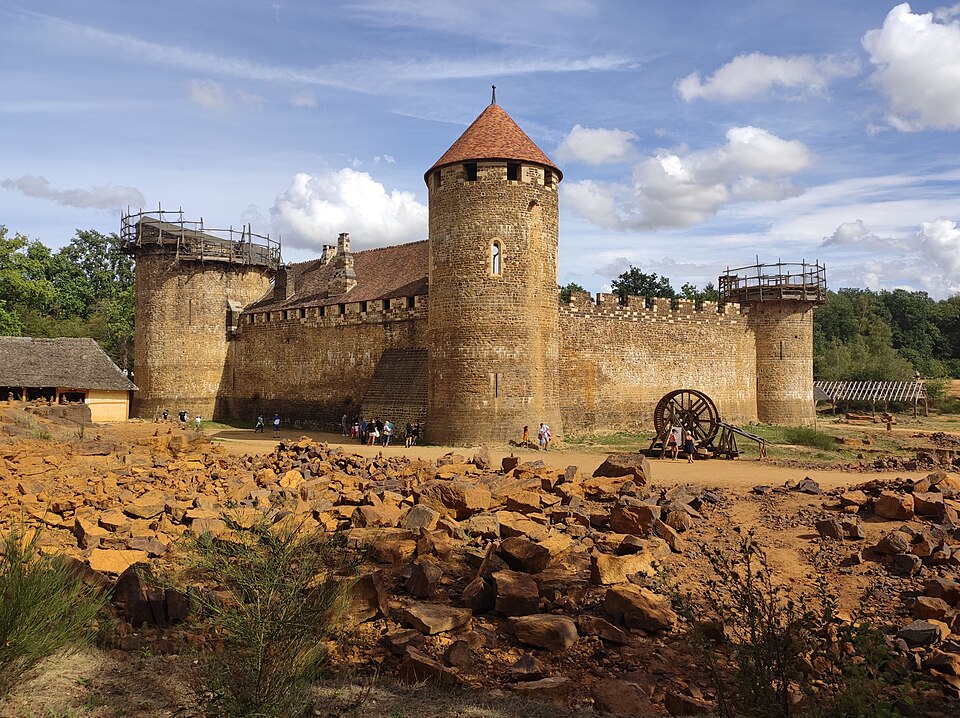 Progress of the Guédelon medieval construction site during the 2026 season
Guédelon: the 2026 season of the project building a medieval castle since 1997
Three-day road trip through the châteaux of Calvados, from Balleroy to Saint-Germain-de-LivetThree-day road trip in Normandy: from Balleroy to the Pays d'Auge via Caen
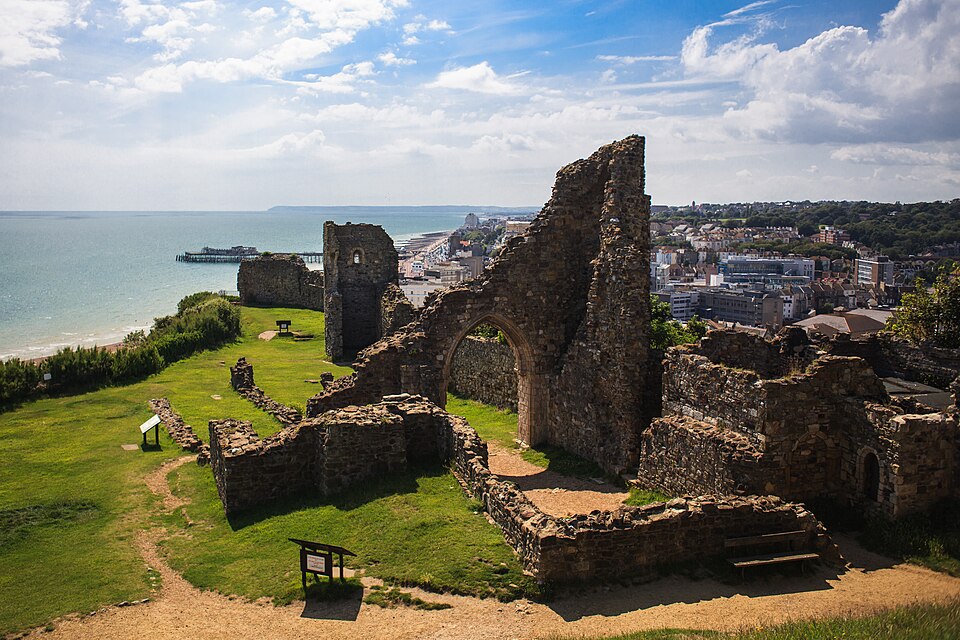 Historical portrait of William the Conqueror through seven castles in Normandy and England, to coincide with the Bayeux Tapestry exhibition at the
William the Conqueror in seven castles: from Brionne to the Tower of London, while the Bayeux Tapestry is in London
Sources