Château perché sur le Himmelsfelsen (602 m)
Hoheneybach Castle
Architecture, patrimoine et histoire · Landkreis Göppingen
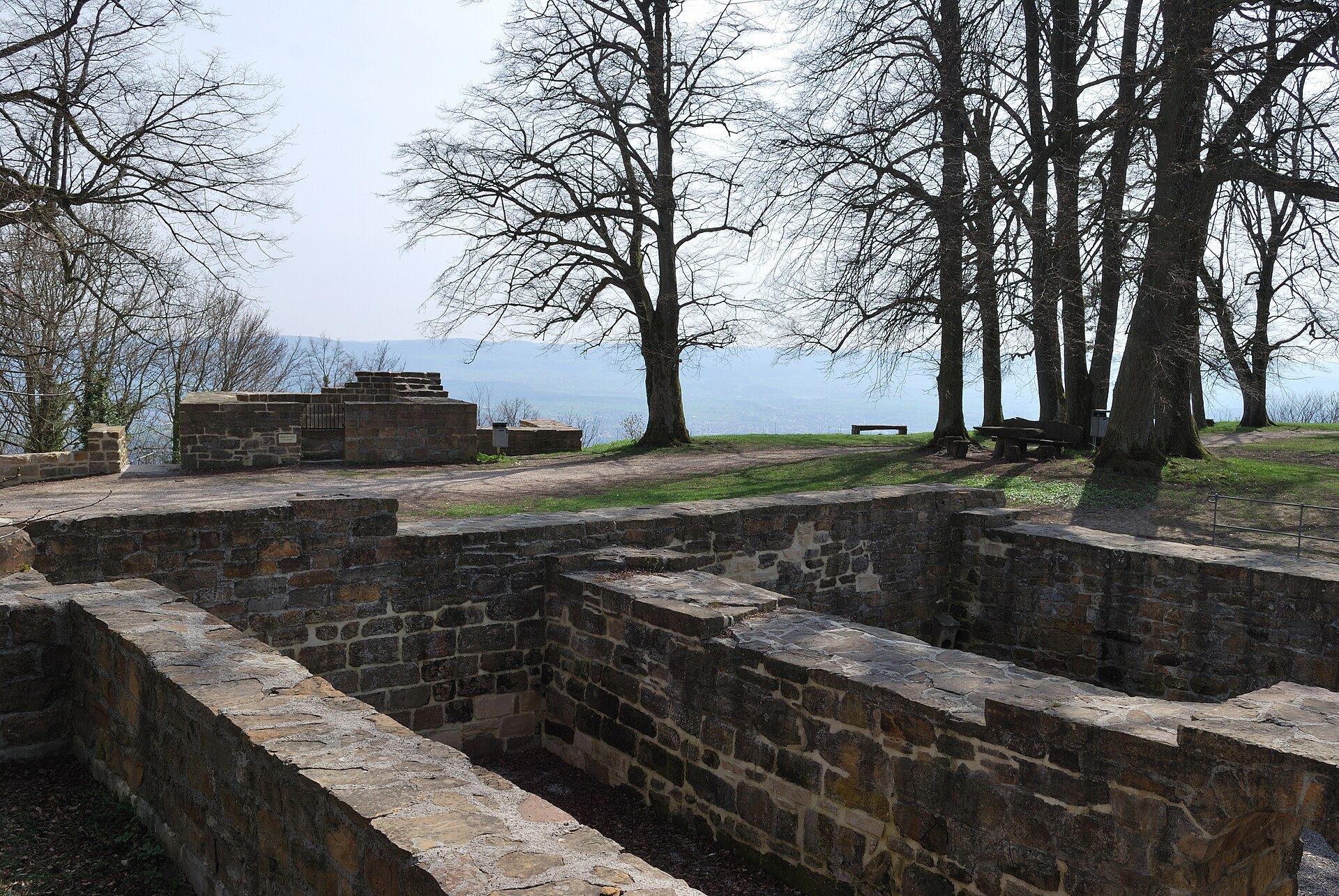
Hoheneybach Castle was a fortified castle perched on the Himmelsfelsen, a rocky spur overlooking the village of Eybach at an altitude of 602 metres, within the territory of Geislingen an der Steige in the Swabian Jura. The site is mentioned indirectly in 1265 and 1281 through the lords of Eybach, probably ministeriales of the Counts of Helfenstein. In 1291 these counts sold the "castrum Iwach" to Ellwangen Abbey, which granted it as a fief: Konrad von Ahelfingen received it in 1317, followed by his son Ulrich, who adopted the name Hoheneybach. The fief then passed to the Randeck family and later to the Zillenhart family, confirmed in 1412. From 1456 the castle became the seat of the Degenfeld family, who in the mid-16th century had a more comfortable residence built at the foot of the rock. Ruined during the Thirty Years' War, it may still have been inhabited around 1711, but by 1724 it was nothing more than a ruin. Traces remain on the ground, along with sections of wall bearing remnants of tuff facing and an impressive 13-metre-deep ditch cutting across the spur.
⌖
Geislingen an der SteigeLandkreis Göppingen
♜
Chronologie documentéePériode de construction
Pourquoi visiter Hoheneybach Castle ?
Fossé de 13 m de profondeur
Siège des Degenfeld à partir de 1456
L’histoire de Hoheneybach Castle
Mentions indirectes en 1265 et 1281 ; en 1291, les comtes de Helfenstein vendent le château à l'abbaye d'Ellwangen. Fief des Ahelfingen dès 1317, puis des Randeck et des Zillenhart (1412), il devient le siège des Degenfeld en 1456. Détruit pendant la guerre de Trente Ans, il est en ruine en 1724.
Figures historiques
Personnalités liées à Hoheneybach Castle
Découvrez les femmes et les hommes documentés dans l’histoire de ce château et retrouvez, pour chacun, les autres demeures auxquelles ils sont associés.
Ce qu’il faut observer
Château fort perché sur un éperon rocheux, isolé par un fossé de 13 mètres de profondeur ; subsistent des traces au sol, des pans de murs et des restes de parement en tuf.
Les étapes de construction
Les principales campagnes documentées qui ont façonné le monument au fil des siècles.
- Datation probable1265–1291Évolution
- Source solide1618–1648Évolution
Nearby
View all castles →