Château d'éperon d'époque staufienne
Waldau Castle (Burg Waldau)
Architecture, patrimoine et histoire · Landkreis Ostalbkreis
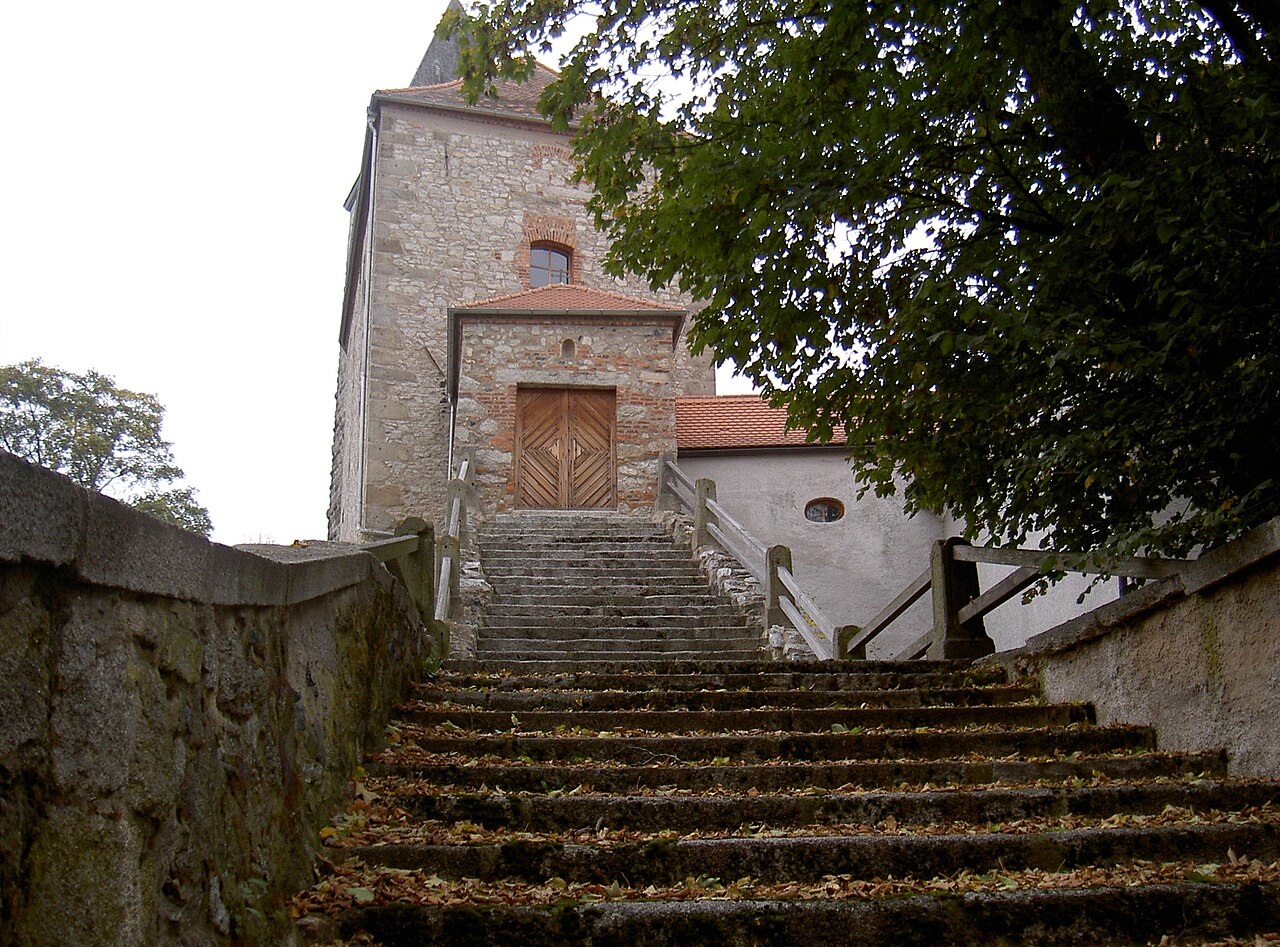
The scant remains of Waldau Castle, called Hohenwalden in a document of 1674, occupy a wooded spur at an altitude of about 451 metres, near the hamlet of Waldau, part of Großdeinbach, today a district of Schwäbisch Gmünd. Recent research sees it as a spur castle of the Staufer period, later than 1150, as suggested by a rusticated stone and pottery sherds from the 12th to the 14th centuries. In 1301 the site belonged to Kraft of Klingenfels, then passed to the lords of Rechberg; in 1393 Wilhelm of Rechberg held it as a fief from Count Ulrich of Hohenlohe. In 1540 Wolf of Rechberg ceded the castle and its farmstead to the Imperial City of Schwäbisch Gmünd, which nevertheless had to receive investiture from the Hohenlohe until this feudal bond was abolished in 1864-1870. A hunting map from around 1567 already shows the site in ruins; the destruction often attributed to the people of Gmünd in 1449 is not proven. Only a few sections of masonry survive in the forest.
⌖
Schwäbisch GmündLandkreis Ostalbkreis
♜
Chronologie documentéePériode de construction
Pourquoi visiter Waldau Castle (Burg Waldau) ?
Fief des comtes de Hohenlohe dès 1393
Vendu à la ville impériale de Schwäbisch Gmünd en 1540
L’histoire de Waldau Castle (Burg Waldau)
Château d'éperon d'époque staufienne (après 1150). Possession de Kraft de Klingenfels en 1301, puis des Rechberg, fief des Hohenlohe dès 1393. Vendu en 1540 à Schwäbisch Gmünd ; déjà ruiné vers 1567.
Figures historiques
Personnalités liées à Waldau Castle (Burg Waldau)
Découvrez les femmes et les hommes documentés dans l’histoire de ce château et retrouvez, pour chacun, les autres demeures auxquelles ils sont associés.
Ce qu’il faut observer
Château d'éperon dont subsistent seulement quelques restes de murs ; une pierre à bossage atteste une construction staufienne.
Les étapes de construction
Les principales campagnes documentées qui ont façonné le monument au fil des siècles.
- Datation à confirmer1150–1250Évolution
Nearby
View all castles →