En un regard
Le château en bref
The Château de Challain-la-Potherie, located in the French commune of Challain-la-Potherie in Maine-et-Loire, was built between 1847 and 1854 in the neo-Gothic style then fashionable among the French aristocracy. Its architect, René Hodé, designed many other châteaux in the same style in Anjou, but Challain remains the most imposing of them. Its size and bearing have earned it the nicknames "petit Chambord" or "Chambord angevin".
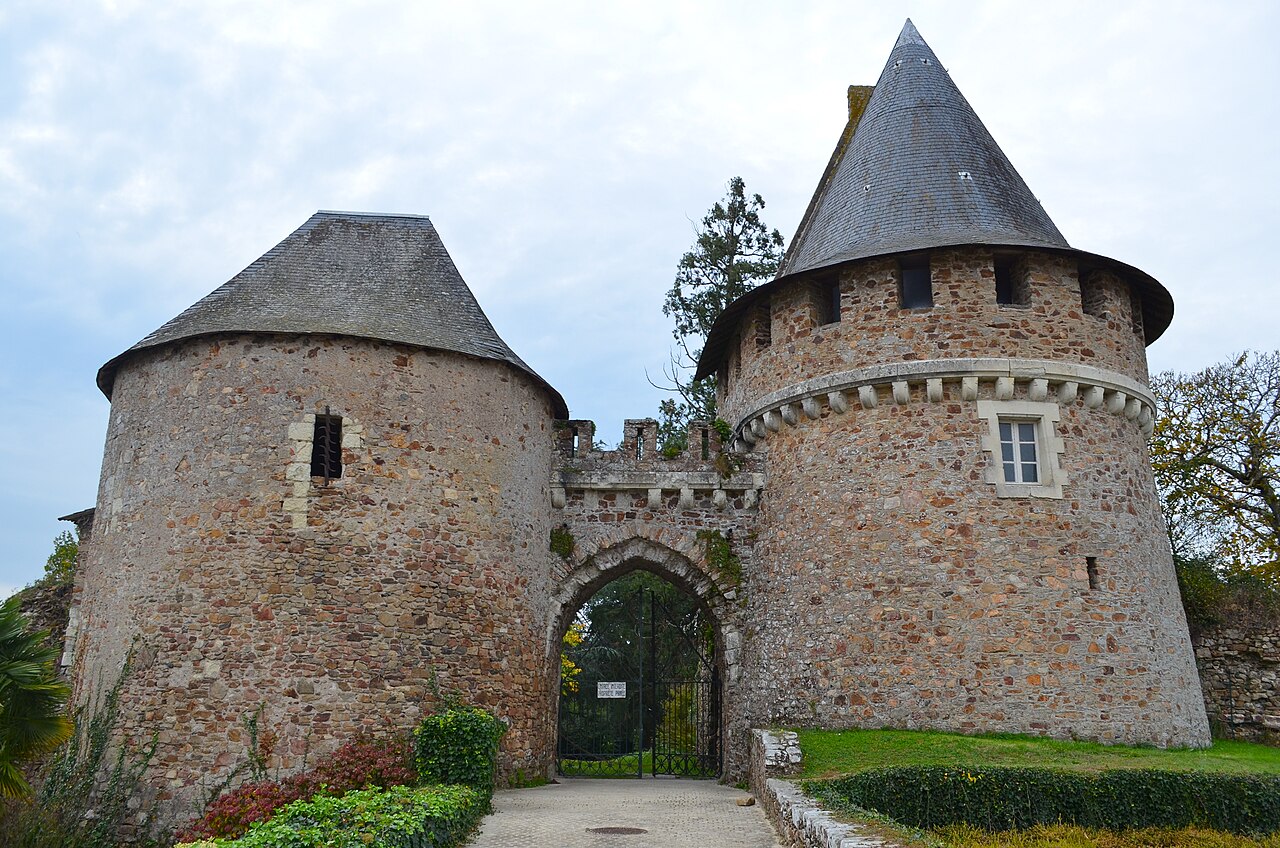
The present building replaces an older château, whose origins date back to the Middle Ages. Former seat of the lordship of Challain, it passed into the hands of many families over the course of its history. Through sales and inheritances, it was successively owned by the Châteaubriant family and the Chambes family before falling to members of the family of Nicolas Fouquet, and then to the La Potherie family, which gave its name to both the château and the village.
The nineteenth-century château was commissioned by Louise-Ida de La Potherie, the last of the name, and her husband, the Comte de La Rochefoucauld-Bayers. Choosing the neo-Gothic style was, for them, a way of restoring the family's glory after the French Revolution. It was also a choice motivated by the tastes of the time, neo-Gothic being then in vogue among the Angevin aristocracy. René Hodé adopted more precisely the troubadour style, which lays a neo-medieval decor over a functional structure. The internal layout and general arrangement of the château in fact follow the neoclassical architectural rules developed in the eighteenth century.
Despite its grandeur and its important place in the history of Angevin architecture, it suffered considerable decline after the death of its commissioners. It had many successive owners during the twentieth century, and served as a centre for holiday camps for some twenty years. It was finally converted into luxury guest rooms in 2002.