En un regard
Le château en bref
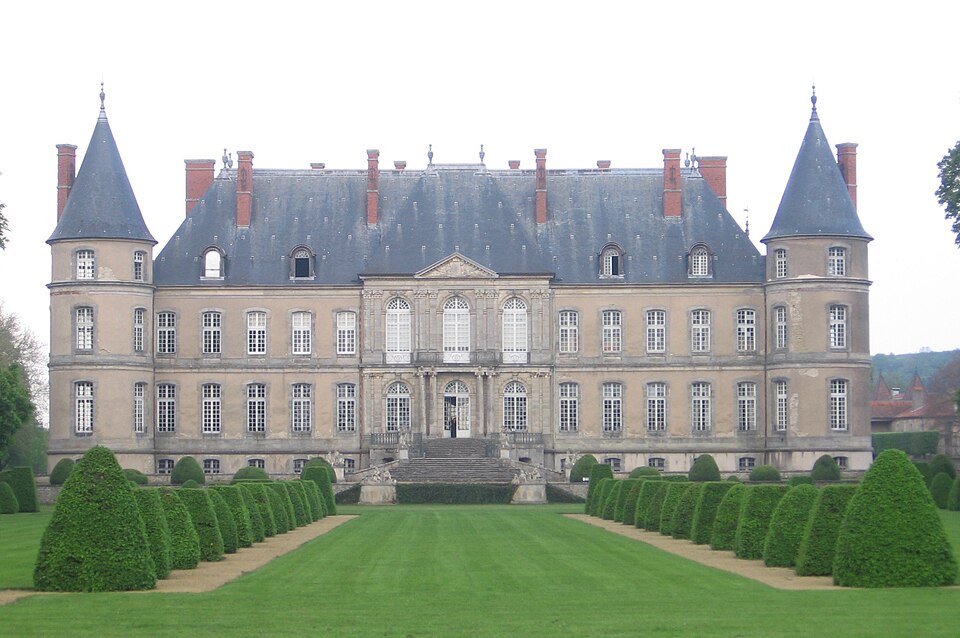
Lunéville Castle has been a residence of the Dukes of Lorraine since the 13th century, initially as an occasional seat and then as an official one from the 18th century onwards. Its current form was built for Duke Leopold I between 1703 and 1720, to plans by Pierre Bourdict, Nicolas Dorbay and Germain Boffrand.
Leopold I, born in exile during the French occupation, did not take possession of his duchies until the signing of the Treaty of Ryswick (1697).
He then discovered Nancy, his capital, and its medieval palace in a sorry state, and whose renovation far exceeded his financial means.
Moreover, it took only a few years for war to set Europe ablaze once more, bringing yet another military occupation of the duchies by the French army (but this time a peaceful one). Proudly and not without panache, the duke withdrew to Lunéville, where he had the château entirely rebuilt, drawing inspiration, as was the fashion of the time, from the Château de Versailles. He made it his principal residence and died there in 1729.
His son, Duke François III, was soon forced to cede his possessions for life to the King of Poland, a king in exile who had the advantage of being the father-in-law of the King of France. The former Polish king, Stanislas Leszczyński, also took possession of Lunéville, which he had redeveloped to his own taste. He died there accidentally in February 1766. The duchy and Lunéville were then annexed by France.
The Lorraine châteaux passed to King Louis XV of France, who did not know what to do with them. Many were destroyed. Lunéville survived but was converted into a barracks.
Since 17 March 2017, the Conseil départemental de Meurthe-et-Moselle has owned the entire château.
A masterpiece of 18th-century architecture, the "Versailles lorrain" was listed as a monument historique in 1901 for its chapel and in 1998 in its entirety.
Over its history, the château has suffered several fires, the most recent in January 2003, which sparked a major mobilisation for its reconstruction.