
Augsburg
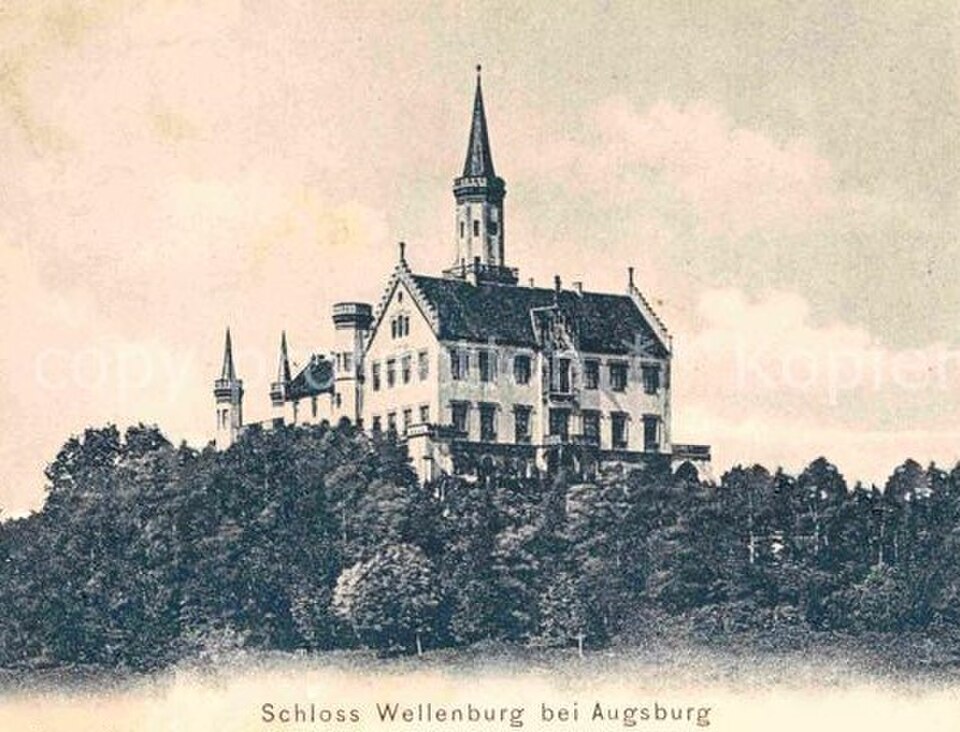
Schloss Wellenburg
architecte de la porterie · après 1595
→Stadtwerkmeister of Augsburg (1602–1631)
Elias Holl (Augsburg, 28 February 1573 – 6 January 1646) is the most important architect of the late German Renaissance. Son of the master builder Hans Holl, he became Stadtwerkmeister (city master builder) of Augsburg in 1602 and designed the Zeughaus (1602–1607), the Perlach Tower (1614–1616) and, above all, the Town Hall (1614–1620), the pinnacle of German civic architecture before the Thirty Years' War. A Protestant, he lost his post in 1631. His name is linked to Wellenburg: Jakob III Fugger, who bought the castle in 1595, commissioned the gatehouse from him. His buildings, drawings and family chronicle (Hauschronik) have been the subject of substantial university studies.
Elias Holl was born into a dynasty of builders in Augsburg. His father, Hans Holl, taught him the trade; the Neue Deutsche Biographie notes that he was working on building sites from 1586, passed his master's examination in 1596 and spent time in Italy in 1600–1601. He was appointed Stadtwerkmeister in 1602, responsible for the whole of the city's public building works.
Schloss WellenburgBorn in Augsburg into a family of master builders; his father, Hans Holl, trained him.
Passed the master's examination.
Study trip to Italy; back in Augsburg at the end of January 1601.
Appointed Stadtwerkmeister after the Gießhaus (1601) and the Beckenhaus.
Construction of the arsenal (Zeughaus), his first major work.
Jakob III Fugger, who had just bought Wellenburg, commissioned him to build the castle's gatehouse.
Construction of the Town Hall of Augsburg, his major achievement; the Perlach Tower was heightened in 1614–1616.
Loses his post as Stadtwerkmeister because of his Protestant convictions.
Died in Augsburg.
The arsenal (1602–1607), the Siegelhaus, the butchers' hall (1609), the St Anne gymnasium (1613), the Perlach Tower (1614–1616), the Town Hall (1614–1620) and the Holy Spirit hospital (1626–1631) form a body of work that blends Swabian traditions with Italian references. The art historian Werner Hager saw in the Rathaus one of the peaks of German civic architecture before the Thirty Years' War.
Shortly after Jakob III Fugger bought the castle in 1595, Holl was commissioned to build the gatehouse at Wellenburg. This work forms part of the castle's development under the Fuggers, between the campaign of Matthäus Lang (around 1513) and the later Baroque and Neo-Gothic alterations.
Removed from his post in 1631 because of his Protestant convictions, Holl left an illustrated Hauschronik and drawings that informed Eva Haberstock's monograph (2016). The Stadt Augsburg today maintains his legacy, notably in the Zeughaus he designed.
This summary cross-references several sources to document the places, events and historical relationships.