
Augsburg
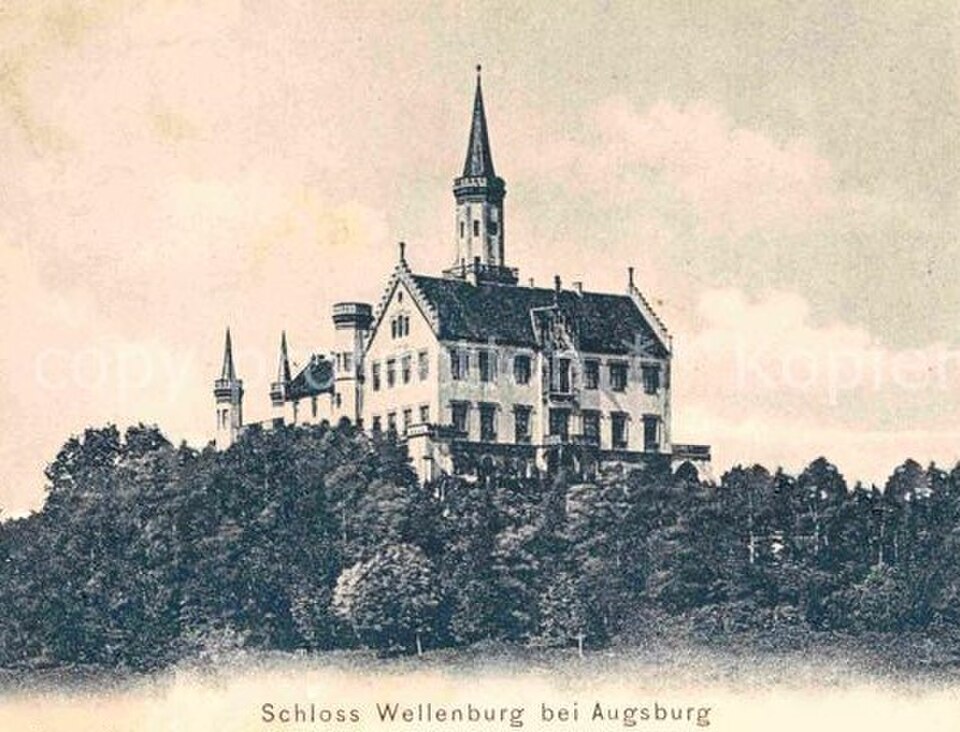
Schloss Wellenburg
propriétaire dès 1507 et bâtisseur du palais de plaisance de vers 1513 · 1507-1513
→Bishop of Gurk (1505–1522) · Cardinal (1511) · Coadjutor of Salzburg (1514) · Prince-Archbishop of Salzburg (1519–1540) · Edler von Wellenburg
Matthäus Lang von Wellenburg (1468 or 1469 – 1540) was an ecclesiastic and statesman of the Holy Roman Empire, born in Augsburg into a middle-class family. A close collaborator of Emperor Maximilian I, he became Bishop of Gurk (1505), cardinal (1511), and coadjutor and then prince-archbishop of Salzburg (1519–1540). Ennobled by Maximilian, who made him ‘Edler von Wellenburg’, he acquired the castle of Wellenburg, near Augsburg, in 1507 and had a pleasure palace built there around 1513. Its main wing and St George’s Chapel form the core of the present castle. In Salzburg he came into conflict with his subjects in 1523 and again during the Peasants’ War of 1525. His likeness is fixed by portraits of the Danubian Renaissance, including that by Albrecht Altdorfer around 1528, and by university scholarship devoted to his activity as a builder.
Born in Augsburg in 1468 or 1469, Matthäus Lang made his career in the Church and in the service of Maximilian I. German library catalogues list him under numerous variants (Lang von Wellenburg, Matthaeus Langius), a sign of his European renown. He held several offices in succession: coadjutor and then bishop of Gurk, cardinal in 1511, coadjutor of Salzburg in 1514, and archbishop in 1519.
Schloss WellenburgBorn in Augsburg; biographies waver between 1468 and 1469.
Becomes coadjutor to the Bishop of Gurk, whose see he takes over after the death of Raimund Peraudi (September 1505).
Wellenburg falls to him after passing through several patrician families of Augsburg; Emperor Maximilian I grants him the title of Edler von Wellenburg.
Raised to the cardinalate by Julius II (1511); in 1512, cardinal-deacon of Sant’Angelo.
Has a pleasure palace built at Wellenburg, placed at the emperor’s disposal; the main wing and St George’s Chapel date from this campaign.
The chapter of Salzburg elects him coadjutor to the archbishop.
Start of his episcopate as Archbishop of Salzburg, which lasts until his death.
Serious conflict with his subjects in 1523, then a further crisis during the Peasants’ War of 1525.
Portrait of the prince-archbishop by Albrecht Altdorfer.
Died in Salzburg.
Owner of Wellenburg from 1507, Lang had a pleasure palace built there around 1513, intended in particular to host Maximilian I. The main wing and St George’s Chapel belong to this phase and form the core of the castle, which was later bought by the Fuggers (1595) and remodelled in the neo-Gothic style in 1857–1858. A university study by Nicole Riegel (Münster, 2009) is devoted to his whole activity as a builder.
Having become prince-archbishop in 1519, Lang governed Salzburg until his death in 1540. The 1911 Encyclopaedia Britannica notes his unpopularity with his subjects, a serious conflict in 1523, and further difficulties during the Peasants’ War of 1525.
His seals as cardinal and as archbishop are preserved and studied by the University of Graz. Albrecht Altdorfer painted his portrait around 1528 (study by Mathias F. Müller, 2011); another likeness, attributed to a master of the Danube School and dated 1529, is held at the Kunsthistorisches Museum in Vienna.
This summary cross-references several sources to document the places, events and historical relationships.