
Castries
Château de Castries
Commanditaire des jardins et de l'aqueduc (XVIIe siècle)
→Marquis de Castries · Governor of Montpellier and Sète · Lieutenant general in Languedoc · Gentleman of the King's Chamber
René-Gaspard de La Croix (1611-1674), first Marquis de Castries, is the great builder of the Castries château as it is known today. Son of Jean de La Croix, Baron de Castries, and Louise de L'Hôpital, lady of honour to Queen Anne of Austria, he enjoyed royal favour: Gentleman of the Chamber in 1639, he obtained the elevation of the barony of Castries into a marquisate in the early 1640s. His marriage to Isabeau (or Élisabeth) de Bonzi, sister of the future cardinal Pierre de Bonzi, president of the Estates of Languedoc, placed him within the inner circle of provincial power. Lieutenant general of the armies in 1660, governor of Montpellier and Sète, then lieutenant general in Languedoc, he was tasked in 1670 with containing the Protestant unrest in the Cévennes. At Castries, he restored the château, which had been ruined in 1622: reconstruction began in 1645 under the master builder Jean Bonnassier, French-style gardens attributed to Le Nôtre, and an aqueduct of nearly 7 km bringing water from Fontgrand in 1670. He also had the hôtel de Castries in Montpellier remodelled. His portrait, preserved at the château, is protected as a monument historique.
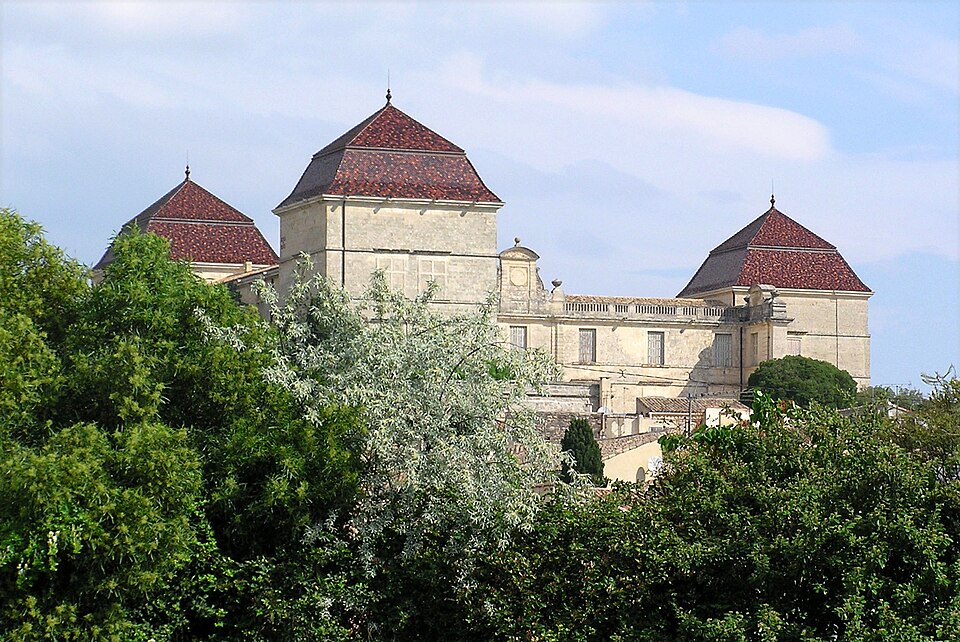
The medieval château having been razed in 1622, René-Gaspard had a classical residence built from 1645 in golden stone: two wings at right angles around a main courtyard, flanked by square pavilions. The master builder Jean Bonnassier is mentioned on the site in 1663-1664. The planned third wing was never built.
Château de CastriesBirth, son of Jean de La Croix, Baron de Castries, and Louise de L'Hôpital.
Gentleman of the Chamber and title of marquis.
The marquisate is attached to the barony of Castries.
Marriage to Isabeau (Élisabeth) de Bonzi, sister of the future cardinal de Bonzi.
Start of the reconstruction of the Castries château.
Lieutenant general of the armies.
French-style gardens attributed to André Le Nôtre.
Tapping of the Fontgrand spring and construction of the aqueduct; mission against the Cévennes unrest.
Death; his son Joseph-François succeeds him.
The marquis commissioned gardens and fountains attributed to Le Nôtre, then, to supply them, had an aqueduct of nearly 7 km built from the Fontgrand spring. This ensemble earned the estate its nickname, the “little Versailles of Languedoc”.
Through his marriage to the sister of Pierre de Bonzi, bishop of Béziers, then archbishop of Narbonne and cardinal, Castries became a relay of royal power in Montpellier. The two brothers-in-law together dominated the political life of Languedoc and the Estates of the province.
Cette synthèse croise plusieurs sources pour documenter les lieux, événements et relations historiques.