
Horaires
Propriété privée, ne se visite pas ; seule l'orangerie du parc peut être louée pour des événements.
Architecture, patrimoine et histoire · Landkreis Tübingen
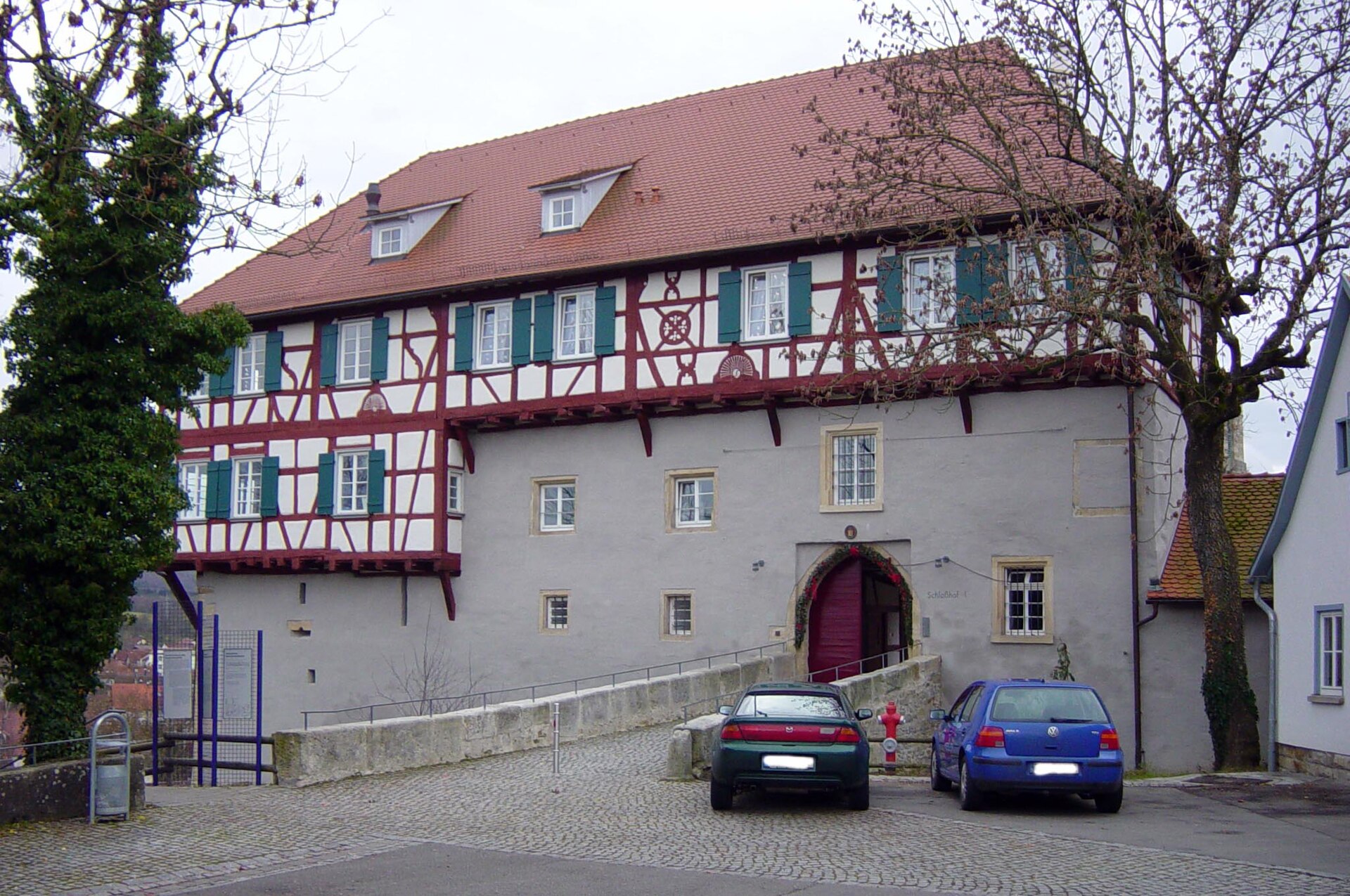
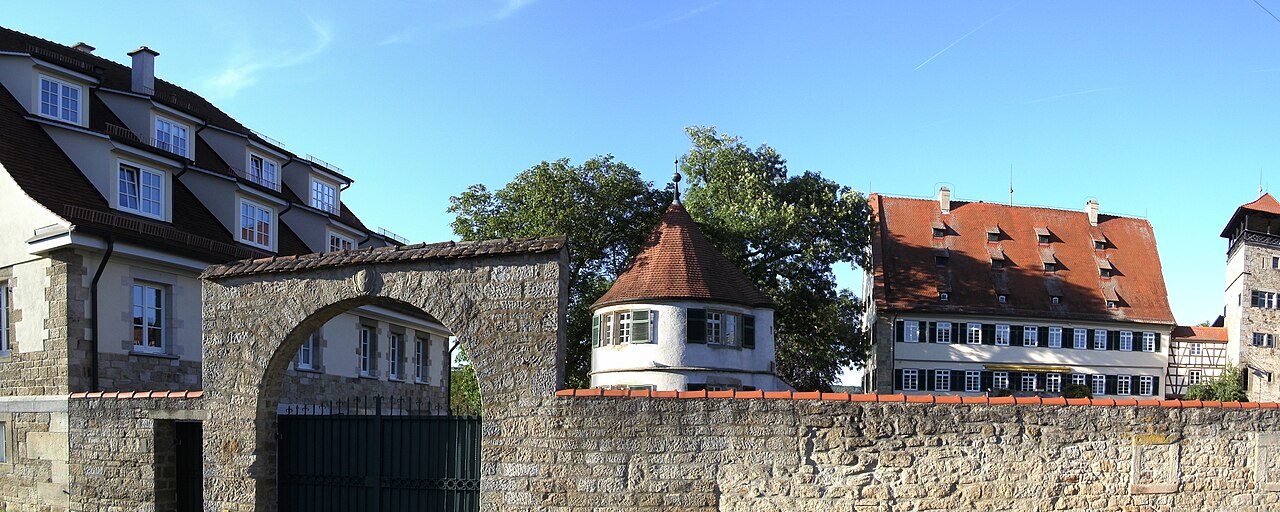
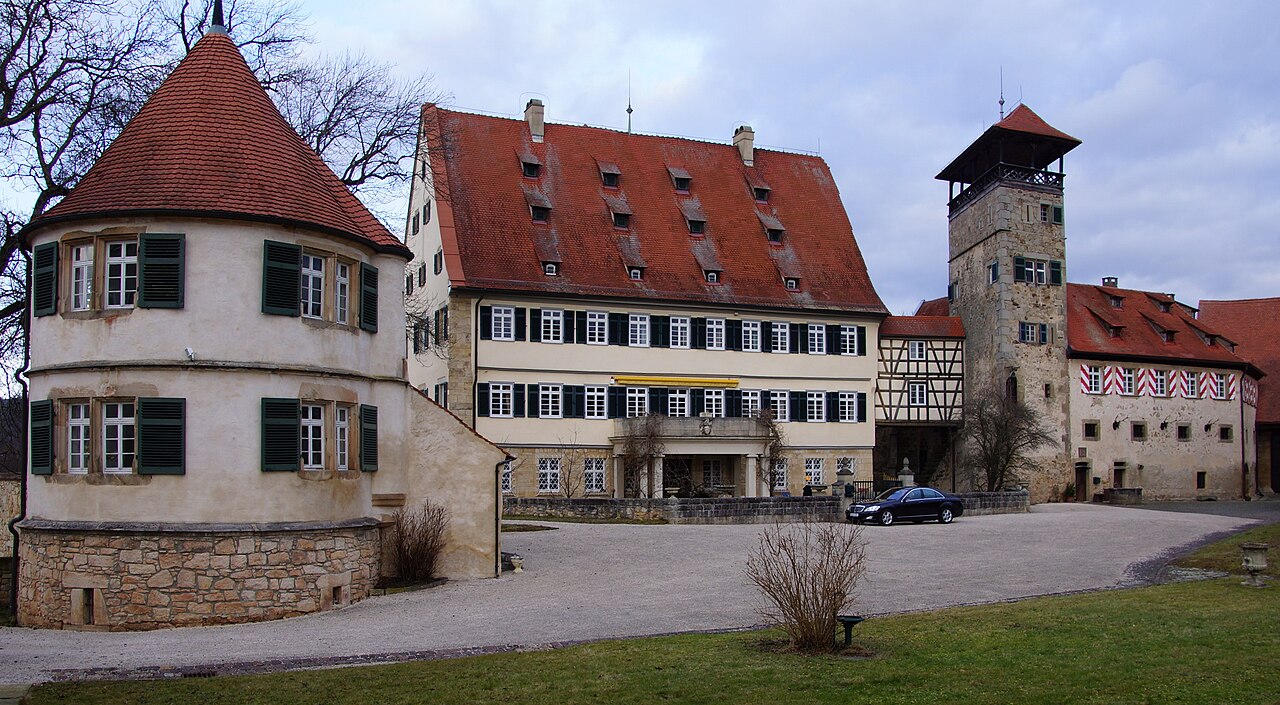
In the heart of the village of Kilchberg, now a district of Tübingen, Schloss Kilchberg preserves the imprint of a moated castle whose core dates back to the Hohenstaufen era. Its octagonal plan, very rare in German castle architecture, is often compared to that of Castel del Monte in Italy. The village appears in records in 1261, then held by the knightly Lescher family, whose coat of arms became that of the locality. The knights von Ehingen succeeded them in 1438: at the end of the 15th century, Georg von Ehingen, counsellor to Count Eberhard of Württemberg, built a late Gothic residence on the medieval foundations, keeping the octagonal moat. Wings added in the early 16th century gave the castle its present silhouette. In the 18th century, Karl Magnus Leutrum von Ertingen laid out a Baroque garden with an orangery and a lower castle. Since 1779 the estate has belonged to the von Tessin family. As a private residence it cannot be visited; only the orangery can be hired for receptions.
Toutes les informations pour organiser votre venue au Kilchberg Castle.
Propriété privée, ne se visite pas ; seule l'orangerie du parc peut être louée pour des événements.
Non ouvert au public
Plan octogonal rare, comparé à Castel del Monte
Logis gothique tardif de Georg von Ehingen
Jardin baroque et orangerie du XVIIIe siècle
Château entouré d'eau d'origine médiévale, antérieur à 1261. Aux Lescher de 1261 à 1438, puis aux von Ehingen ; Georg von Ehingen bâtit le château actuel à la fin du XVe siècle. Les Ehingen s'éteignent en 1608. Immédiat d'Empire jusqu'en 1806. Les Leutrum von Ertingen le cèdent en 1779 aux barons von Tessin, actuels propriétaires.
Découvrez les femmes et les hommes documentés dans l’histoire de ce château et retrouvez, pour chacun, les autres demeures auxquelles ils sont associés.
Noyau staufien de plan octogonal rare avec fossé octogonal conservé ; logis gothique tardif de la fin du XVe siècle et annexes du début du XVIe siècle ; jardin baroque avec orangerie et château inférieur du XVIIIe siècle.
Propriétaire documenté : Famille von Tessin
Propriété privée des barons von Tessin ; l'orangerie du parc se loue pour des événements.
Les principales campagnes documentées qui ont façonné le monument au fil des siècles.