Château salien de la fin du XIe siècle
Ravenstein Castle remains (Burgrest Ravenstein)
Architecture, patrimoine et histoire · Landkreis Göppingen
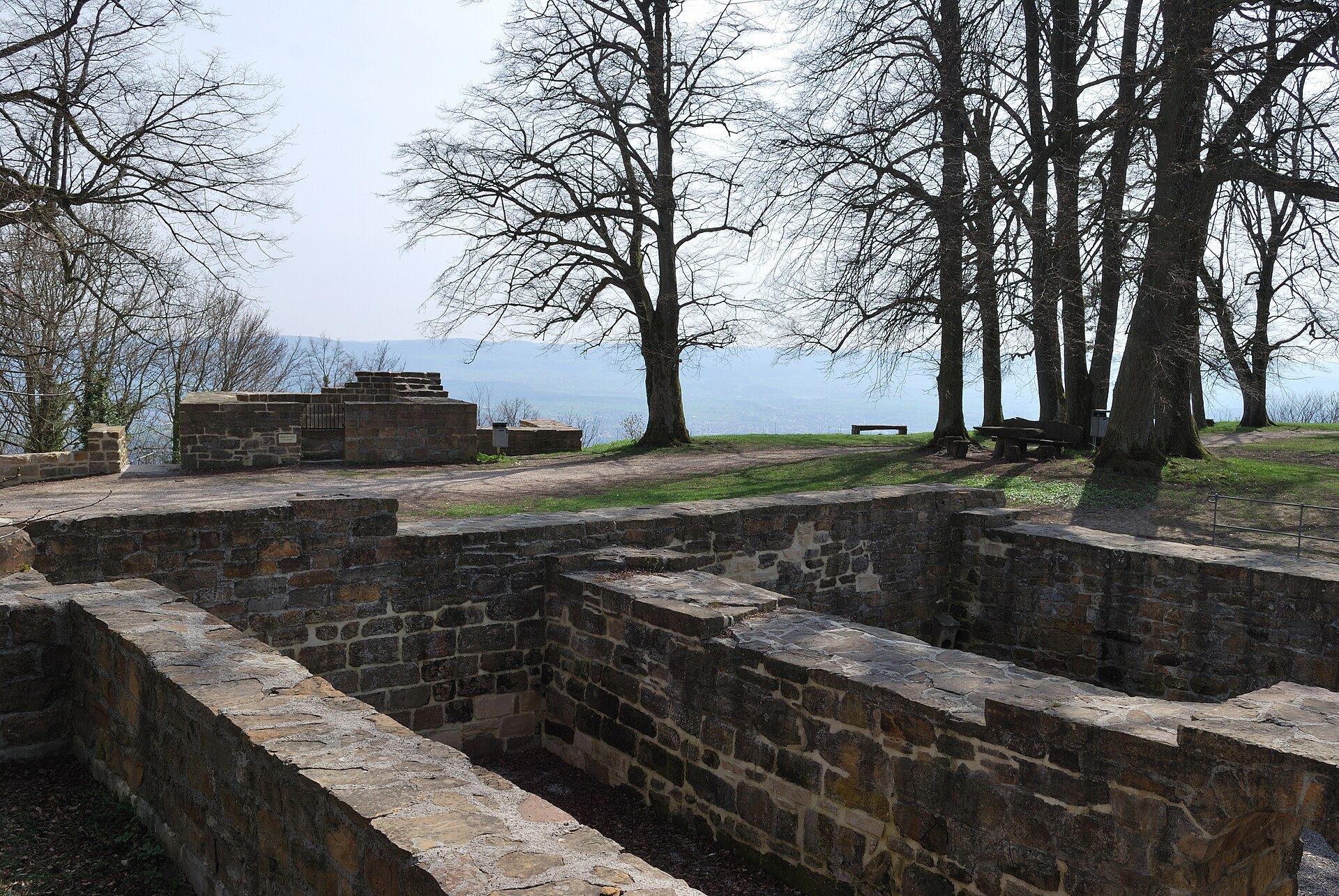
North-west of Steinenkirch, in the municipality of Böhmenkirch, the remains of Ravenstein Castle crown a rocky spur of the Swabian Jura at an altitude of about 610 metres. The fortress dates back to the second half of the 11th century: a Herbort of Ravenstein appears in a charter of 1091, and the high-noble line of Ravenstein-Stubersheim, which also held seats at Stubersheim and Neckartenzlingen, is attested in those same years. Built of stone, the castle rose over three levels; two ditches cut into the rock protected it to the south and east, and a cistern hewn into the rock survives in the northern corner. Around 1393 the Zillenhart, a family of lesser nobility, were attacked and plundered there. Remodelled in the 16th and 17th centuries, the building was almost entirely demolished in 1765; the outer bailey, on the site of the present Jägerhaus, was rebuilt in the 19th century. Today, rubble and sections of wall lie hidden beneath old beech trees, at a site popular with climbers.
⌖
BöhmenkirchLandkreis Göppingen
♜
Chronologie documentéePériode de construction
Pourquoi visiter Ravenstein Castle remains (Burgrest Ravenstein) ?
Fossés et citerne taillés dans le roc
Démoli presque entièrement en 1765
L’histoire de Ravenstein Castle remains (Burgrest Ravenstein)
Construit dans la seconde moitié du XIe siècle ; Herbort de Ravenstein est cité en 1091. Vers 1393, Siegfried de Zillenhart y est attaqué. Remanié aux XVIe-XVIIe siècles, le château est presque entièrement démoli en 1765.
Figures historiques
Personnalités liées à Ravenstein Castle remains (Burgrest Ravenstein)
Découvrez les femmes et les hommes documentés dans l’histoire de ce château et retrouvez, pour chacun, les autres demeures auxquelles ils sont associés.
Ce qu’il faut observer
Château d'éperon en pierre sur trois niveaux, défendu par deux fossés taillés dans le roc ; citerne rupestre conservée dans l'angle nord.
Les étapes de construction
Les principales campagnes documentées qui ont façonné le monument au fil des siècles.
- Datation probable1050–1091Évolution
- Datation probable1500–1699Évolution
- Datation probable1765Évolution
Nearby
View all castles →