
Henry VIII’s coastal forts (the ‘Device’ programme, 1539–1547): seven artillery castles from Kent to Cornwall and the evolution of their architecture
Henry VIII’s Device Forts: seven artillery castles on England’s coast, from Deal to Pendennis
In 1539, facing the threat of invasion, Henry VIII fortified England’s south coast. From Deal’s rose window to St Mawes’ trefoil and Yarmouth’s iron-tipped bastion, seven forts reveal the birth of modern fortification—from Kent to Cornwall.
Editorial journal · Carte des Châteaux ·
Côtes anglaises, 1539-1547
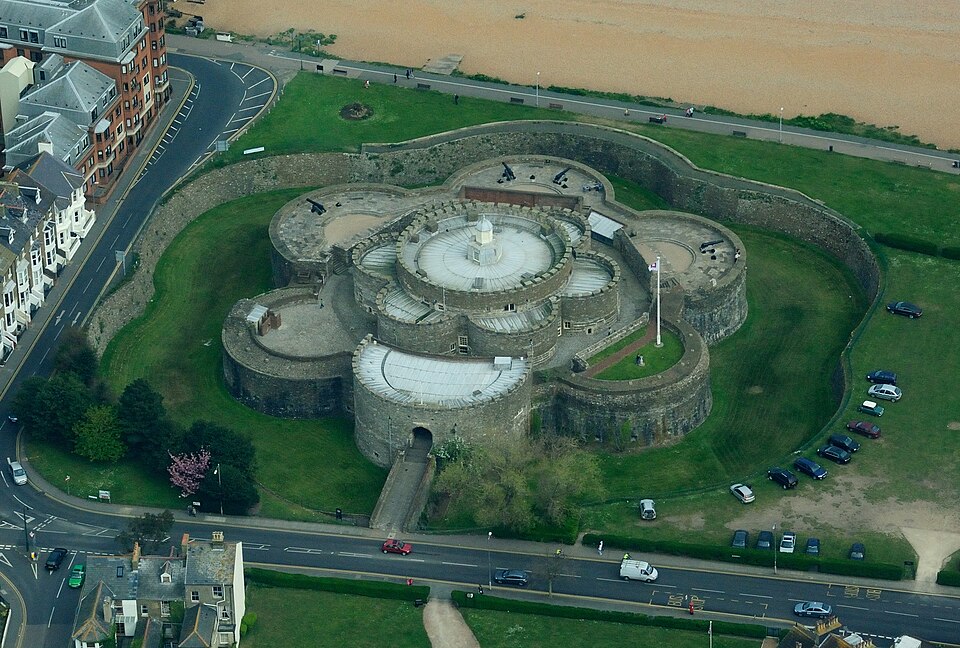
Seen from above, the forts Henry VIII built along England’s coast resemble stone flowers: a rose at Deal, a trefoil at St Mawes. Yet their design was anything but ornamental. In 1538, Francis I and Charles V reconciled, and in December, Pope Paul III issued a bull excommunicating the King of England for breaking with Rome. Fearing a landing by Catholic powers, Henry VIII launched a coastal artillery fort programme in 1539, stretching from the Downs of Kent to the Fal estuary. Low-slung, squat and pierced with multi-level embrasures, these structures were built for cannons—not archers—marking England’s shift from medieval castle to modern fortification. Seven of them, open to the public seasonally, trace this transformation in under a decade, from Deal’s rose window of 1539 to Yarmouth’s iron-tipped bastion of 1547. Late autumn, when seaside crowds thin, is the perfect time to understand what they once guarded: anchorages, channels and wind-lashed moorings.
Which fort for which visitor?
Three figures tied to these forts
Henri VIII
1491 - 1547
King of England from 1509, he broke with Rome in the 1530s to annul his first marriage and declared himself Supreme Head of the Church of England. Isolated against Catholic powers, he built a chain of artillery forts along the coast from 1539 until his death. His son Edward VI succeeded him in 1547.
Charles Ier
1600 - 1649
King of England, Scotland and Ireland from 1625, he clashed with Parliament during the civil wars of the 1640s and ended up a prisoner. Tried in London in January 1649, he was beheaded on 30 January outside the Banqueting House in Whitehall.
Arthur Wellesley, duc de Wellington
1769 - 1852
Victor over Napoleon at Waterloo in 1815, then Prime Minister from 1828 to 1830, he became Lord Warden of the Cinque Ports in 1829 and made Walmer one of his residences. He died there on 14 September 1852.
Planning an off-season visit
Read next
Dover Castle: stones from the lost Sandown Castle finally identified
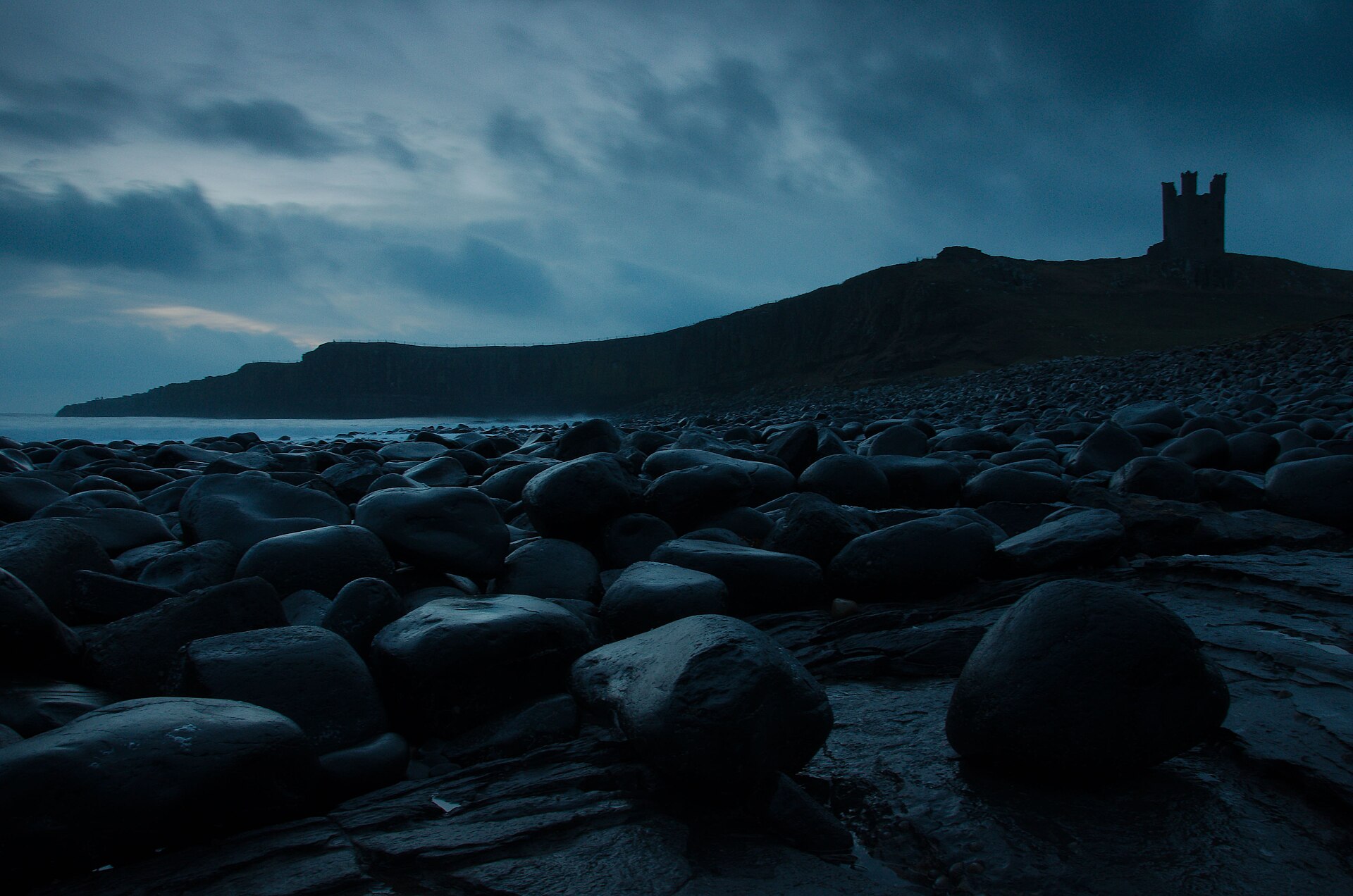 Three-day itinerary along the Northumberland coast (England) in late autumn: Warkworth, Dunstanburgh, Bamburgh, Lindisfarne and Norham
Northumberland Coast: Three Days of Castles, from Warkworth to Norham, in Seal-Watching Season
 Historical portrait of William the Conqueror through seven castles in Normandy and England, to coincide with the Bayeux Tapestry exhibition at the
William the Conqueror in seven castles: from Brionne to the Tower of London, while the Bayeux Tapestry is in London
 Understanding heritage vocabulary: château, castle, fortress and palace
Château, castle, fortress, palace: what’s the difference?
Sources